
Peanut patch therapy is emerging as one of the most talked-about developments in food allergy care, especially for families living with the constant fear of accidental peanut exposure. For parents of children with peanut allergy, daily life often feels like walking on a tightrope, reading every label, avoiding social situations, and worrying about severe reactions.
Until recently, treatment options focused mainly on avoidance and emergency preparedness. While effective for safety, they did nothing to change the child’s underlying allergy. Newer approaches are now shifting that reality. One such promising option is the peanut allergy patch, also known as epicutaneous immunotherapy.
But what exactly is this treatment? How does it work, and is it truly a breakthrough for families? Let us explore this clearly and honestly.
Understanding the Burden of Peanut Allergy
Peanut allergy is one of the most common and persistent food allergies in children. Unlike milk or egg allergy, which many children outgrow, peanut allergy often continues into adolescence and adulthood.
Even tiny amounts of peanut protein can trigger reactions, making accidental exposure a real concern. This ongoing risk affects not just the child’s health, but also emotional well-being, school life, and family routines.
This is why new peanut allergy treatment options are receiving so much attention from both parents and specialists.
What Is Peanut Patch Therapy?
Peanut patch therapy is a form of epicutaneous immunotherapy, a treatment designed to gently train the immune system through the skin rather than through ingestion.
In simple terms, a patch containing a very small amount of peanut protein is applied to the child’s skin daily. The allergen is absorbed through the outer layers of the skin, where immune cells process it in a controlled and gradual way.
Unlike oral immunotherapy, the peanut protein is not eaten. This difference is important for safety and tolerance, especially in younger children.
Viaskin Peanut Patch: The Most Recognised Option
The most well-known form of peanut patch therapy is the Viaskin peanut patch.
This patch is designed to:
- Deliver a precise, consistent dose of peanut protein
- Avoid exposure to the bloodstream or digestive system
- Reduce the risk of severe systemic reactions
Clinical trials have shown that regular use over time can increase the amount of peanut protein a child can tolerate, offering protection against accidental exposure.
How Peanut Allergy Patch Treatment Works
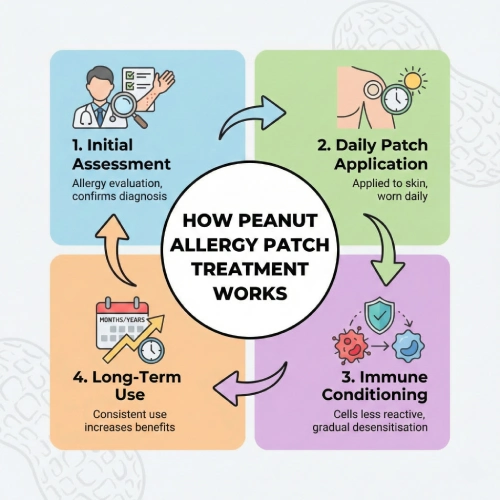
Step 1: Initial Assessment
Before starting therapy, a detailed allergy evaluation is essential. This confirms the diagnosis and helps determine suitability.
Step 2: Daily Patch Application
The patch is applied to intact skin, usually on the upper arm or back, and worn for a fixed number of hours each day.
Step 3: Immune Conditioning
Over time, immune cells in the skin become less reactive to peanut protein. This leads to gradual desensitisation.
Step 4: Long-Term Use
Peanut patch therapy is a long-term treatment. Benefits increase with consistent daily use over months to years.
What Are the Benefits of Peanut Patch Therapy?
Parents are often drawn to this option because of its simplicity and safety profile.
Key benefits include:
- Non-invasive and needle-free
- No ingestion of peanut protein
- Lower risk of severe reactions compared to oral therapies
- Suitable for younger children
- Easy to integrate into daily routines
For families anxious about oral exposure, this approach feels more manageable.
Is Peanut Patch Therapy a Cure?
This is one of the most common questions parents ask.
Peanut patch therapy does not “cure” peanut allergy in the traditional sense. Instead, it helps reduce sensitivity and lower the risk of severe reactions due to accidental exposure.
Some children develop sustained tolerance with long-term use, while others gain partial protection. The response varies, which is why realistic expectations and expert guidance are essential.
Safety and Side Effects
One of the strengths of peanut allergy patch treatment is its safety profile.
The most common side effects are mild and localised, such as:
- Redness or itching at the patch site
- Mild eczema-like reactions
Severe allergic reactions are rare, making this therapy appealing for children who may not tolerate oral immunotherapy well.
Which Children May Benefit Most?
Peanut patch therapy may be considered for:
- Young children with confirmed peanut allergy
- Children with high anxiety around food ingestion
- Families looking for a lower-risk desensitisation option
- Children not suitable for oral immunotherapy
Each child’s allergy history, age, and overall health must be carefully assessed before starting treatment.
Epicutaneous Immunotherapy in Dubai: Growing Interest
Awareness of epicutaneous immunotherapy in Dubai is steadily increasing as families seek modern, evidence-based allergy solutions.
Dubai’s diverse population and rising allergy rates have highlighted the need for specialised paediatric allergy care. As newer therapies become available, expert supervision remains critical to ensure safety, correct use, and realistic outcome expectations.
Peanut patch therapy is not a home remedy or over-the-counter solution. It requires structured follow-up and professional oversight.
Peanut Patch vs Oral Immunotherapy
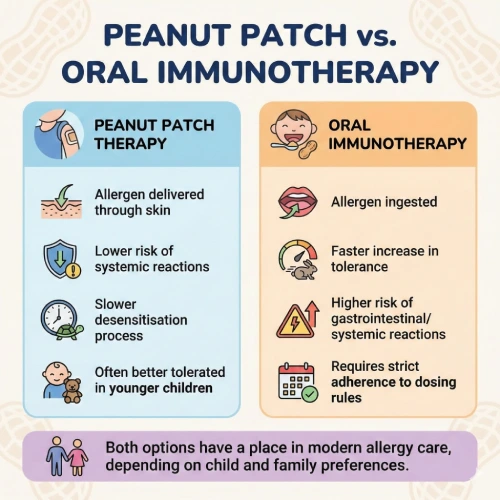
Parents often ask how peanut patch therapy compares to oral immunotherapy.
Peanut Patch Therapy:
- Allergen delivered through skin
- Lower risk of systemic reactions
- Slower desensitisation process
- Often better tolerated in younger children
Oral Immunotherapy:
- Allergen ingested
- Faster increase in tolerance
- Higher risk of gastrointestinal or systemic reactions
- Requires strict adherence to dosing rules
Both options have a place in modern allergy care, depending on the child and family preferences.
What Does the Research Say?
Clinical studies on the Viaskin peanut patch have shown encouraging results, particularly in children aged 1 to 11 years. Many participants demonstrated increased tolerance to peanut protein compared to placebo groups.
While research is ongoing, these results have given families renewed hope and expanded the treatment conversation beyond avoidance alone.
FAQs Parents Commonly Ask
How long does peanut patch therapy take to work?
Benefits are gradual and usually seen over several months to a year.
Does my child still need an adrenaline auto-injector?
Yes. Emergency medication is still required as a safety precaution.
Can the patch be used alongside other treatments?
In some cases, yes, but only under specialist guidance.
Is peanut patch therapy suitable for teenagers?
It may be considered, but response rates are generally better in younger children.
Key Takeaways for Families
- Peanut patch therapy is a promising advancement, not a miracle cure
- It offers safer, gentler immune training through the skin
- Best results come with early use and consistent application
- Specialist supervision is essential for success
For many families, this therapy represents progress, reassurance, and a step towards a safer everyday life.
Conclusion
Peanut patch therapy is opening new doors for families seeking safer and more manageable ways to reduce peanut allergy risks. If you are exploring new peanut allergy treatment options or want to understand whether epicutaneous immunotherapy in Dubai is suitable for your child, expert guidance makes all the difference.
For personalised assessment and evidence-based care, consult Dr. Mahesh Katre, Consultant Paediatrician and Paediatric Allergist in Dubai. You can contact the clinic on +971 55 232 9107 to discuss whether peanut patch therapy may be an appropriate option for your child’s allergy management journey.