
Peanut allergy treatment is one of the most common topics parents search and talk about today. That’s because peanut allergy is still a leading cause of serious allergic reactions in children worldwide.
For many years, the only advice was complete avoidance: no peanuts, no risk. But living this way often meant constant worry, fear of accidental exposure, and a big impact on a child’s everyday life.
Now, thanks to new research and treatments like oral immunotherapy, the approach is starting to change.
The question most parents ask is straightforward: Can oral immunotherapy actually cure peanut allergy in kids, or does it just lower the risk?
Let’s explain this clearly, honestly, and based on the latest science.
Understanding Peanut Allergy in Children
Peanut allergy is an immune system reaction where a child’s body mistakenly identifies peanut protein as harmful. This triggers an allergic response that can range from mild symptoms to life-threatening anaphylaxis.
Unlike some childhood allergies that children outgrow naturally, peanut allergy tends to persist into adulthood in most cases. This is what makes it particularly concerning for families.
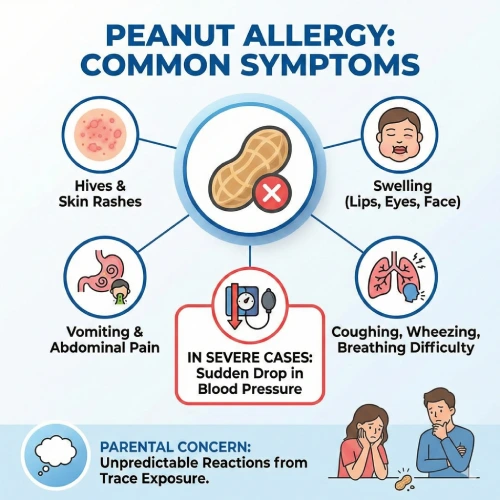
Common symptoms of peanut allergy include:
- Hives or skin rashes
- Swelling of lips, eyes, or face
- Vomiting or abdominal pain
- Coughing, wheezing, or breathing difficulty
- Sudden drop in blood pressure in severe cases
For parents, the unpredictability of reactions often becomes the most stressful part. Even trace exposure can cause a reaction in some children, which is why newer treatment approaches are gaining attention.
Why Traditional Peanut Allergy Treatment Focused on Avoidance
For decades, peanut allergy treatment mainly revolved around strict avoidance and emergency preparedness.
Parents were advised to:
- Eliminate peanuts completely from the child’s diet
- Read food labels meticulously
- Inform schools and caregivers
- Always carry adrenaline auto-injectors
While this approach reduces exposure, it does not change the underlying allergy. The immune system remains sensitive, and accidental exposure is always a risk. This is where newer therapies such as oral immunotherapy have changed how specialists think about food allergies.
What Is Oral Immunotherapy?
Oral immunotherapy is a structured medical treatment designed to train the immune system to tolerate small amounts of an allergen over time.
In the case of peanut allergy, OIT peanut allergy protocols involve giving extremely tiny, controlled doses of peanut protein to a child under medical supervision. These doses are gradually increased over months.
The goal is not reckless exposure. It is controlled, predictable exposure designed to reduce immune overreaction.
How OIT Works in Peanut Allergy
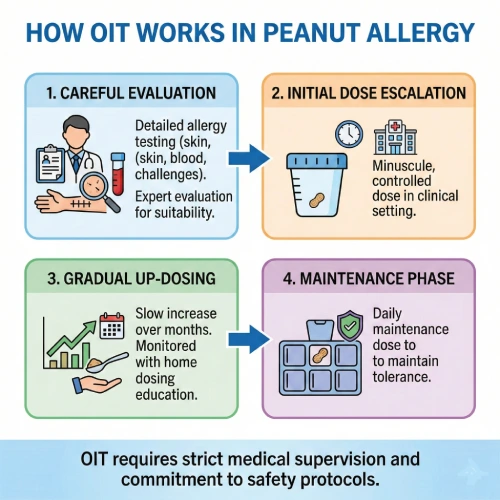
Step 1: Careful Evaluation
Before starting oral immunotherapy, a child undergoes detailed allergy testing. This may include skin prick tests, blood tests, and sometimes oral food challenges.
Not every child with peanut allergy is suitable for OIT, which is why expert evaluation is essential.
Step 2: Initial Dose Escalation
The treatment starts with a minuscule amount of peanut protein, often far below what could cause symptoms. This is given in a controlled clinical setting.
Step 3: Gradual Up-Dosing
Over several months, the dose is slowly increased. Each increase is carefully monitored, and families are educated on home dosing, symptom recognition, and safety measures.
Step 4: Maintenance Phase
Once a target dose is reached, the child continues taking a daily maintenance dose. This phase is crucial for maintaining tolerance.
OIT Peanut Allergy: What Are the Real Benefits?
Parents often ask whether OIT completely eliminates peanut allergy. The answer requires clarity.
What OIT can do:
- Increase the amount of peanut protein a child can tolerate
- Reduce the risk of severe reactions from accidental exposure
- Lower anxiety for children and parents
- Improve quality of life and social confidence
What OIT does not guarantee:
- It is not an instant cure
- It does not mean a child can freely eat peanuts without ongoing management
- It requires long-term commitment and medical supervision
That said, for many families, even reducing the risk of accidental reactions is life-changing.
Can Oral Immunotherapy Cure Peanut Allergy in Children?
This is where language matters.
From a scientific perspective, oral immunotherapy does not currently “cure” peanut allergy in the traditional sense. Instead, it induces desensitisation.
Desensitisation means the immune system becomes less reactive as long as regular exposure is maintained. In some children, long-term tolerance may develop, but this varies from child to child.
So when parents search for cure peanut allergy children, the honest answer is that OIT offers meaningful protection and control, not a guaranteed permanent cure.
Is OIT Safe for Children?
Safety is one of the biggest concerns for parents considering oit peanut allergy treatment.
When done under expert supervision, OIT has been shown to be safe and effective for selected children. However, mild reactions such as itching in the mouth, abdominal discomfort, or mild hives can occur, especially during dose increases.
This is why OIT should never be attempted at home without specialist guidance. A structured programme, proper education, and emergency planning are essential components of safe therapy.
Which Children Are Good Candidates for OIT?
Not every child with peanut allergy is suitable for oral immunotherapy.
Children may be considered if they:
- Have a confirmed peanut allergy
- Have frequent accidental exposures or high anxiety around food
- Are able to follow dosing routines consistently
- Have families who understand the commitment involved
Children with uncontrolled asthma or certain medical conditions may need stabilisation before starting treatment.
Food Allergy Immunotherapy in Dubai: Why Expertise Matters
The demand for food allergy immunotherapy in Dubai has increased significantly as awareness grows among families seeking advanced allergy care.
Dubai offers access to specialised paediatric allergy services, but the success of OIT depends heavily on the expertise of the treating specialist.
Food immunotherapy is not a one-size-fits-all treatment. It requires:
- Accurate diagnosis
- Personalised dosing plans
- Close monitoring
- Ongoing family education
Choosing the right specialist ensures both safety and effectiveness.
Life After Starting Oral Immunotherapy
Families often notice changes beyond medical outcomes.
Children experience:
- Reduced fear around food
- Increased confidence in social settings
- Improved participation in school activities
Parents experience:
- Less constant anxiety
- More flexibility in daily routines
- Better understanding of allergy management
These quality-of-life improvements are one of the strongest reasons families consider oral immunotherapy.
Common Myths About OIT Peanut Allergy
“OIT means my child can eat peanuts freely”
Not exactly. OIT increases tolerance but does not remove the allergy label overnight.
“Once we stop OIT, the allergy is gone”
Stopping maintenance doses may cause tolerance to decrease in many children.
“OIT is too risky”
When properly supervised, risks are managed carefully and safety protocols are strict.
FAQs About Oral Immunotherapy for Peanut Allergy
1. How long does oral immunotherapy take?
OIT typically takes several months to reach maintenance, followed by long-term daily dosing.
2. Will my child still need an adrenaline auto-injector?
Yes. Emergency medication is still required as a safety measure.
3. Can OIT be done for other food allergies?
Yes. OIT is being used for multiple food allergies under expert care.
4. Is OIT suitable for toddlers?
Early intervention can be beneficial in selected cases, but assessment is essential.
Final Thoughts
Peanut allergy no longer has to mean living in constant fear. Advances in oral immunotherapy are changing how we manage and reduce risks associated with peanut allergy in children. While it may not be a guaranteed cure, it offers real, measurable protection and a better quality of life for many families.
If you are exploring peanut allergy treatment or considering food allergy immunotherapy in Dubai, consult a specialist who can guide you through the process safely and realistically.
For expert evaluation and personalised care, consult Dr. Mahesh Katre, Consultant Paediatrician and Paediatric Allergist in Dubai. You can contact the clinic on +971 55 232 9107 to discuss whether oral immunotherapy is suitable for your child and take the next step towards safer allergy management.