

Many new parents search online for “introducing allergens to babies.” It’s one of the most common questions and for very good reason.
Just 10 years ago, doctors advised parents to wait before giving babies foods that can cause allergies, such as peanuts, eggs, and dairy. Today, new research shows that waiting too long may actually make allergies more likely. This change in advice has left many parents unsure about what is safe and when to start.
So, when is the best time to introduce these foods? Which ones should come first? And how can parents do it safely and without worry?
Let’s break down the latest evidence-based recommendations in a clear, practical way.
Why Early Allergen Introduction Matters More Than Ever
Food allergies in children have increased globally over the last few decades. Peanut allergy, egg allergy, and milk allergy are now commonly diagnosed even in infancy.
Research has shown that the immune system in early life is more adaptable. Introducing allergenic foods during this “window of opportunity” can help the immune system learn that these foods are safe, rather than dangerous.
This concept is the foundation of early allergen introduction, and it has transformed allergy prevention strategies worldwide.
What Do We Mean by Allergens?
Allergens are foods that commonly trigger allergic reactions. The most common ones include:
- Peanuts
- Eggs
- Cow’s milk
- Tree nuts
- Wheat
- Soy
- Fish and shellfish
Parents often worry that these foods are “too strong” for babies. In reality, when introduced correctly, they can play a key role in allergy prevention for babies in Dubai and globally.
Latest Guidelines on When to Give Allergens to Infants
The Ideal Age Window
According to current international guidelines, allergenic foods should be introduced between 4 and 6 months of age, once the baby is developmentally ready for solid foods.
This timing applies to:
- Breastfed babies
- Formula-fed babies
- Babies with or without eczema
Delaying allergens beyond this period does not reduce allergy risk. In some cases, it may increase it.
Signs Your Baby Is Ready for Allergen Introduction
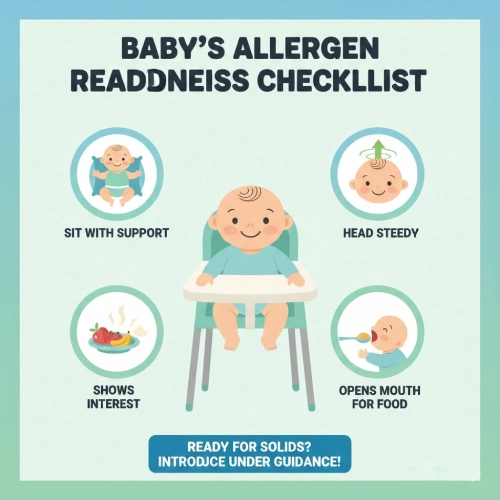
Before asking when to give allergens to infants, it is important to check if your baby is ready for solids.
Your baby should be able to:
- Sit with minimal support
- Hold their head steady
- Show interest in food
- Open their mouth when food is offered
If these signs are present, allergen introduction can begin safely under guidance.
Peanut Introduction Guidelines: What Parents Should Know
Peanut allergy is one of the most common and feared food allergies, which is why peanut introduction guidelines are discussed so widely.
For Babies with No Eczema or Food Allergy
Peanut-containing foods can be introduced at home around 6 months, after a few non-allergenic solids have been tolerated.
For Babies with Mild to Moderate Eczema
Peanut introduction is recommended around 6 months, preferably after discussion with a doctor.
For Babies with Severe Eczema or Egg Allergy
Peanut introduction may be advised as early as 4–6 months but should be done under medical supervision.
Early exposure in these babies has shown a significant reduction in peanut allergy development.
How to Introduce Allergens Safely
Parents often worry about choking or reactions. The key is form and quantity.
Safe forms include:
- Smooth peanut butter mixed with puree
- Well-cooked, mashed egg
- Yogurt or cheese (not cow’s milk as a drink before 1 year)
Never give whole nuts or thick nut butter to babies.
Start with small amounts and observe for any reaction for at least two hours.
Common Reactions to Watch For
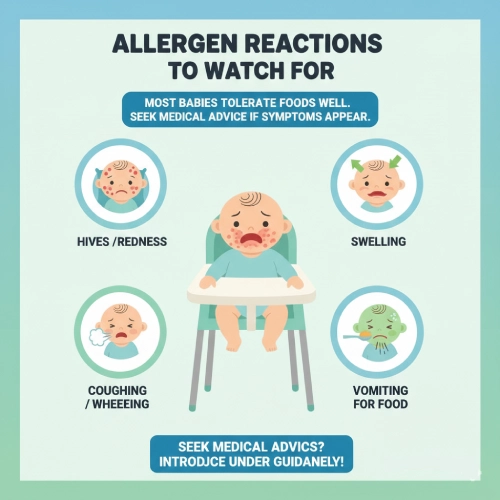
Most babies tolerate allergenic foods well. However, parents should be aware of possible symptoms such as:
- Hives or redness around the mouth
- Vomiting
- Swelling of lips or eyelids
- Coughing or wheezing
If any concerning symptoms appear, medical advice should be sought immediately.
Should Allergenic Foods Be Given Regularly?
Yes. One of the most important aspects of early allergen introduction is consistency.
Once an allergen is introduced and tolerated, it should be given regularly, ideally several times a week. This helps maintain tolerance and supports long-term allergy prevention.
Introducing once and then avoiding the food for months may reduce the benefit.
Special Considerations for High-Risk Babies
Babies with:
- Severe eczema
- Existing food allergies
- Strong family history of allergies
may benefit from a personalised introduction plan.
In these cases, supervised introduction or allergy testing may be recommended before starting certain foods.
Allergy Prevention in Babies Dubai: Why Local Guidance Matters
In Dubai, families come from diverse cultural and dietary backgrounds. Feeding practices vary widely, and many parents receive conflicting advice from different sources.
This is where specialist guidance becomes important. Evidence-based recommendations tailored to the child’s risk profile ensure that allergen introduction is both safe and effective.
Early education plays a major role in reducing unnecessary food restrictions and anxiety among parents.
Common Myths About Introducing Allergens
“Breastfeeding alone prevents food allergies”
Breastfeeding has many benefits, but it does not replace the need for allergen exposure.
“If allergies run in the family, avoid allergens”
Current evidence supports early introduction even in high-risk babies, under guidance.
“One reaction means lifelong allergy”
Not all reactions indicate a true allergy. Proper evaluation is essential.
FAQs: Parents Often Ask
Can allergens be introduced while breastfeeding?
Yes. Breastfeeding can continue alongside allergen introduction.
What if my baby refuses the food?
Re-offer on a different day. It can take multiple attempts.
Should I introduce one allergen at a time?
Yes. This helps identify reactions clearly.
Can allergen introduction prevent all allergies?
It reduces risk but does not guarantee prevention in every child.
Key Takeaways for Parents
- Do not delay allergenic foods unnecessarily
- Start between 4–6 months when developmentally ready
- Use safe forms and small quantities
- Continue regular exposure once tolerated
- Seek expert advice for high-risk babies
Early, informed action can make a meaningful difference in a child’s allergy risk.
Conclusion
Introducing allergens early and safely plays a crucial role in allergy prevention and long-term immune tolerance. If you are unsure about when to give allergens to infants or want personalised guidance on allergy prevention for babies in Dubai, expert evaluation can make the process safer and less stressful.
For trusted, evidence-based advice, consult Dr. Mahesh Katre, Consultant Paediatrician and Paediatric Allergist in Dubai. You can contact the clinic on +971 55 232 9107 to receive personalised guidance on allergen introduction and early allergy prevention for your baby.