

Healthy eating for kids lays the groundwork for a lifetime of wellness. It’s not just about saying no to processed snacks or sugary drinks; it’s about actively shaping habits that nourish the body, mind, and soul from a young age. During childhood, the body grows faster than at any other time in life. Bones are lengthening, muscles are developing, and the brain is forming trillions of neural connections. To support all of this, kids need a steady supply of nutrients in the right balance.
However, modern lifestyles – with fast food, screen time, and busy schedules – often make it challenging for parents to ensure their children are eating well. That’s where a paediatrician-approved nutrition guide comes in handy. With the right knowledge and approach, you can help your child build a positive relationship with food, support their development, and establish healthy habits that last well into adulthood.
Whether it’s packing a nutritious school lunch, introducing new vegetables at dinner, or guiding your child away from constant snacking, every food decision you make has the power to shape your child’s well-being.
Why Healthy Eating for Kids Matters
Children are not just “small adults” — their bodies have unique needs. Their organs are still maturing, their energy requirements differ, and their ability to regulate hunger and fullness is still developing. This is why ensuring healthy eating for children is so essential. The food they eat fuels their daily activities, supports physical growth, and plays a critical role in brain development and emotional stability.
If children regularly consume high-sugar, high-fat, and nutrient-poor foods, the effects go beyond weight gain. Studies have shown that poor childhood nutrition is linked to a higher risk of chronic illnesses like obesity, diabetes, and heart disease later in life. It can also lead to poor concentration, low academic performance, sleep disturbances, and frequent illnesses due to weakened immunity.
Benefits of Healthy Eating:
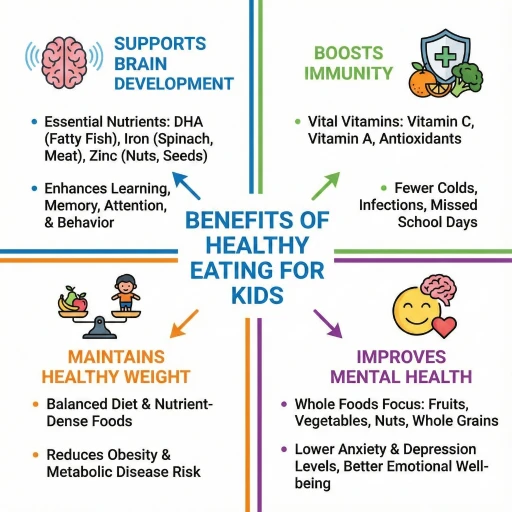
- Supports Brain Development: Nutrients like DHA (an omega-3 fatty acid found in fatty fish), iron (found in spinach, legumes, lean meat), and zinc (from nuts and seeds) are vital for cognitive functions. These support learning, memory retention, attention span, and behavior regulation.
- Boosts Immunity: Fruits and vegetables provide essential vitamins such as vitamin C, vitamin A, and antioxidants that strengthen the immune system. This means fewer colds, infections, and missed school days.
- Maintains Healthy Weight: A balanced diet with appropriate portion sizes and nutrient-dense foods helps kids stay within a healthy weight range. This reduces the risk of childhood obesity and metabolic diseases.
- Improves Mental Health: Research increasingly links diet quality with emotional well-being. Diets rich in whole foods like fruits, vegetables, nuts, and whole grains are associated with lower levels of anxiety and depression in children.
Core Principles of Paediatric Nutrition
Creating a healthy eating plan for your child doesn’t require perfection or elaborate meals. Instead, follow these foundational principles:
1. Balance
Children need all the major food groups — carbohydrates for energy, proteins for growth, fats for cell function, and plenty of fruits and vegetables for vitamins and fiber. A balanced meal might look like a plate with:
- A serving of brown rice or whole wheat roti (carbohydrate)
- Grilled paneer, egg, or dal (protein)
- Stir-fried or raw vegetables (fiber and micronutrients)
- A spoon of ghee or a few avocado slices (healthy fat)
Balancing meals ensures children stay full longer, avoid energy crashes, and receive comprehensive nutrition.
2. Variety
Kids are naturally curious — and this applies to food too. Introducing a wide range of colors, textures, and cuisines not only keeps meals exciting but also prevents nutritional gaps. Each color in fruits and vegetables provides different phytonutrients:
- Orange (carrots, pumpkin): Rich in beta-carotene for eye health
- Green (broccoli, spinach): Packed with iron, calcium, and antioxidants
- Red (tomatoes, watermelon): Contain lycopene, good for the heart
Variety also reduces the chances of food boredom and helps picky eaters expand their comfort zone. It’s okay if they don’t like something the first time — repeated exposure without pressure is key.
3. Moderation
Complete elimination of treats is neither realistic nor necessary. Ice creams, chips, or sweets in small amounts, once in a while, can be part of a healthy diet. The idea is to teach moderation, not restriction. This prevents bingeing and helps children understand that no food is “bad,” but that balance is essential.
Instead of banning junk food, try:
- Setting limits: “Let’s have one cookie today and save the rest for tomorrow.”
- Offering healthier versions: Baked instead of fried, natural sweeteners instead of refined sugar.
- Modeling: Let them see you enjoy treats in moderation too.
4. Regularity
Young children thrive on routine, and so do their digestive systems. Having structured mealtimes and scheduled snacks helps regulate their metabolism and avoids the constant nibbling that can dull appetite and lead to overeating.
Try setting meal times with minimal distractions. Sit at a table, switch off screens, and create a mealtime ritual — this encourages mindful eating and strengthens family bonds. Avoid skipping meals, especially breakfast, which provides essential fuel for learning and play.
5. Mindfulness
Mindful eating is a lifelong skill. Teaching kids to recognize when they’re truly hungry — and when they’re full — empowers them to self-regulate their eating. It also helps prevent emotional or boredom-driven snacking.
Ways to promote mindful eating:
- Serve food in age-appropriate portions, and let kids ask for more if they’re still hungry.
- Avoid pressuring them to “clean the plate.”
- Talk about hunger cues: “Is your tummy saying it’s hungry, or do you just want a snack because you’re bored?”
You can also encourage gratitude and awareness by discussing where food comes from, involving them in cooking, and celebrating food traditions.
Best Foods for Kids’ Health: Age-Wise Breakdown
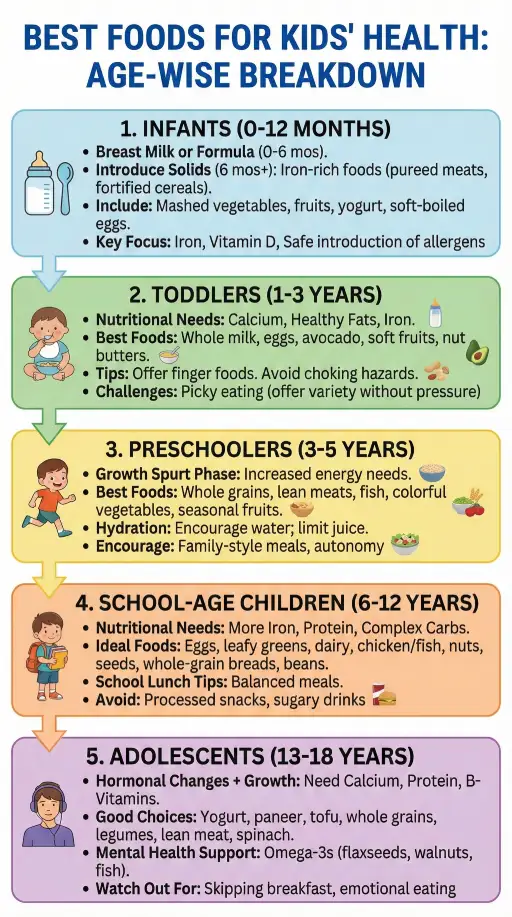
1. Infants (0-12 Months)
- Breast Milk or Formula: The sole source of nutrition for the first 6 months.
- Introduction of Solids (Around 6 Months): Begin with iron-rich foods like pureed meats, lentils, or iron-fortified cereals.
- Include: Mashed vegetables, fruits, yogurt, and soft-boiled eggs (once allergy risk is assessed).
Key Focus: Iron, Vitamin D, and safe introduction of allergenic foods (like peanuts and eggs) as per updated guidelines.
2. Toddlers (1-3 Years)
- Nutritional Needs: High demand for calcium, healthy fats, and iron.
- Best Foods: Whole milk, eggs, avocado, soft fruits, nut butters, small portions of meat or lentils.
- Tips: Offer finger foods for self-feeding. Avoid choking hazards like whole grapes or popcorn.
Common Challenges: Picky eating, food refusal, erratic appetite. Offer food without pressure and include variety.
3. Preschoolers (3-5 Years)
- Growth Spurt Phase: Increased energy needs.
- Best Foods: Whole grains (millets, oats), lean meats, fish, colorful vegetables, seasonal fruits.
- Hydration: Encourage regular water intake; limit juice to no more than 120 ml per day.
Encourage: Family-style meals to model good behavior. Let them serve themselves to develop autonomy.
4. School-Age Children (6-12 Years)
- Nutritional Needs: More iron, protein, and complex carbs to support learning and physical activity.
- Ideal Foods: Eggs, leafy greens, dairy, chicken/fish, nuts, seeds, whole-grain breads, beans.
- School Lunch Tips: Pack easy-to-eat, fun, yet balanced meals with protein, fruits, and whole grains.
Avoid: Processed snack packs, sugary drinks, artificial food colors. These affect attention span and cause energy crashes.
5. Adolescents (13-18 Years)
- Hormonal Changes + Growth Spurts: Need more calcium, protein, and B-vitamins.
- Good Choices: Yogurt, paneer, tofu, whole grains, legumes, lean meat, and iron-rich foods like spinach.
- Mental Health Support: Omega-3s from flaxseeds, walnuts, and fish support mood during teen years.
Watch Out For: Skipping breakfast, emotional eating, or excessive dieting. Open conversations help.
Common Nutritional Deficiencies in Kids
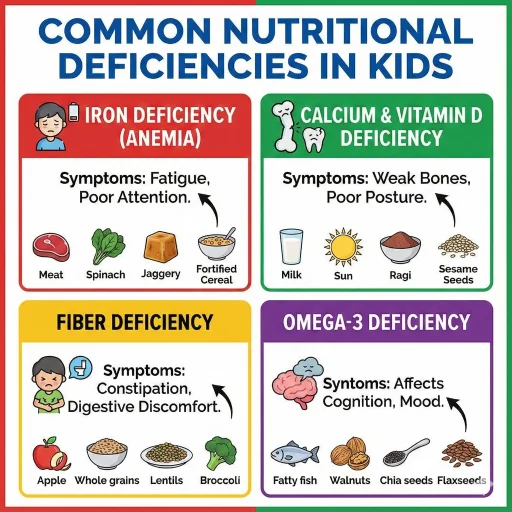
Despite access to food, many children face specific nutrient gaps:
- Iron Deficiency (Anemia): Leads to fatigue, poor attention.
- Sources: Meat, green leafy vegetables, jaggery, fortified cereals.
- Calcium and Vitamin D Deficiency: Weak bones, poor posture.
- Sources: Dairy, fortified plant milk, sunlight, ragi, sesame seeds.
- Fiber Deficiency: Constipation and digestive discomfort.
- Sources: Fruits, vegetables with peel, whole grains, lentils.
- Omega-3 Deficiency: Affects cognition and mood.
- Sources: Fatty fish, walnuts, chia seeds, flaxseeds.
- Sources: Fatty fish, walnuts, chia seeds, flaxseeds.
How to Encourage Healthy Eating Habits
1. Involve Kids in Meal Prep:
Let children wash veggies, stir batters, or set the table. This builds curiosity and ownership over meals.
2. Make the Plate Colorful:
Use a rainbow approach – the more colors, the better the nutrition.
3. Be a Role Model:
Children mimic behavior. If you enjoy vegetables, they’re more likely to try them.
4. Avoid Bribes or Threats:
Using food as a reward creates unhealthy emotional associations. Instead, praise effort.
5. Create a Positive Mealtime Environment:
No screens, no rush. Sit together as a family and make meals enjoyable.
Healthy Snacks for Kids (Paediatrician-Approved)
- Fruit chaat with lemon and chaat masala
- Hummus with veggie sticks
- Roasted makhana or chana
- Homemade smoothies with yogurt and fruit
- Boiled eggs or egg muffins
- Peanut butter on whole-grain toast
- Idli with sambar or veggie paratha rolls
Avoid:
- Packaged juices, flavored yogurts, chips, and high-sugar cereals
Managing Picky Eaters Without Stress
- Respect Appetite: Forcing children to eat increases resistance.
- Routine Helps: Serve meals/snacks at regular intervals to build appetite.
- Expose Repeatedly: Sometimes a child needs to see a food 10-15 times before trying it.
- Add Familiar Favorites: Combine less-liked items with well-loved ones.
Hydration and Beverages
Many children drink insufficient water or rely on sugary beverages. Hydration affects digestion, mood, and cognitive function.
- Encourage Water: Make it fun with fruit infusions or special water bottles.
- Limit Milk to 2 Servings: Excess can reduce appetite.
- Avoid Energy Drinks/Sodas: These are high in caffeine and sugar.
Sample Day Meal Plan (Age 5-8 Years)
- Breakfast: Vegetable upma + glass of milk + 1 date
- Mid-Morning: Seasonal fruit + handful of nuts
- Lunch: Brown rice + dal + bhindi + curd
- Evening Snack: Boiled corn with lemon + coconut water
- Dinner: Chapati + paneer sabzi + salad
Final Thoughts: Start Early, Stay Consistent
Creating healthy eating habits in childhood sets the stage for a lifetime of wellness. The goal is not perfection but consistency and exposure. Don’t stress over occasional indulgences; focus on daily habits. With patience, education, and involvement, you can guide your child to enjoy nourishing, wholesome food every day.
Remember: Every small step counts. You’re not just feeding a child, you’re fuelling their future.