

Eczema triggers in children are one of the most common concerns parents raise during paediatric consultations, especially when flare-ups seem to appear suddenly and without a clear reason. One week, the skin looks calm, and the next, it is red, itchy, and uncomfortable again. This unpredictability is what makes eczema so emotionally and physically challenging for both children and parents.
Eczema, also known as atopic dermatitis, is not just a skin condition. It is a chronic inflammatory disorder influenced by genetics, the immune system, and the environment around the child. Understanding what triggers flare-ups is the first and most important step in gaining long-term control rather than reacting to symptoms repeatedly.
Understanding Eczema in Children
Eczema in children is a condition where the skin barrier does not function as effectively as it should. This allows moisture to escape and irritants to enter more easily, leading to dryness, inflammation, and intense itching.
Many children with eczema also have a personal or family history of allergies, asthma, or hay fever. This link explains why eczema often behaves differently from simple dry skin and why flare-ups can be influenced by factors far beyond skincare alone.
Why Identifying Triggers Matters
Every child with eczema is different. While two children may have similar-looking rashes, the triggers behind their flare-ups can be completely different.
Identifying and avoiding specific triggers can:
- Reduce the frequency of flare-ups
- Decrease the need for repeated medication
- Improve sleep and comfort
- Reduce long-term skin damage
Instead of constantly treating flares, the goal is to prevent them as much as possible.
Eczema Triggers in Children: The Most Common Ones
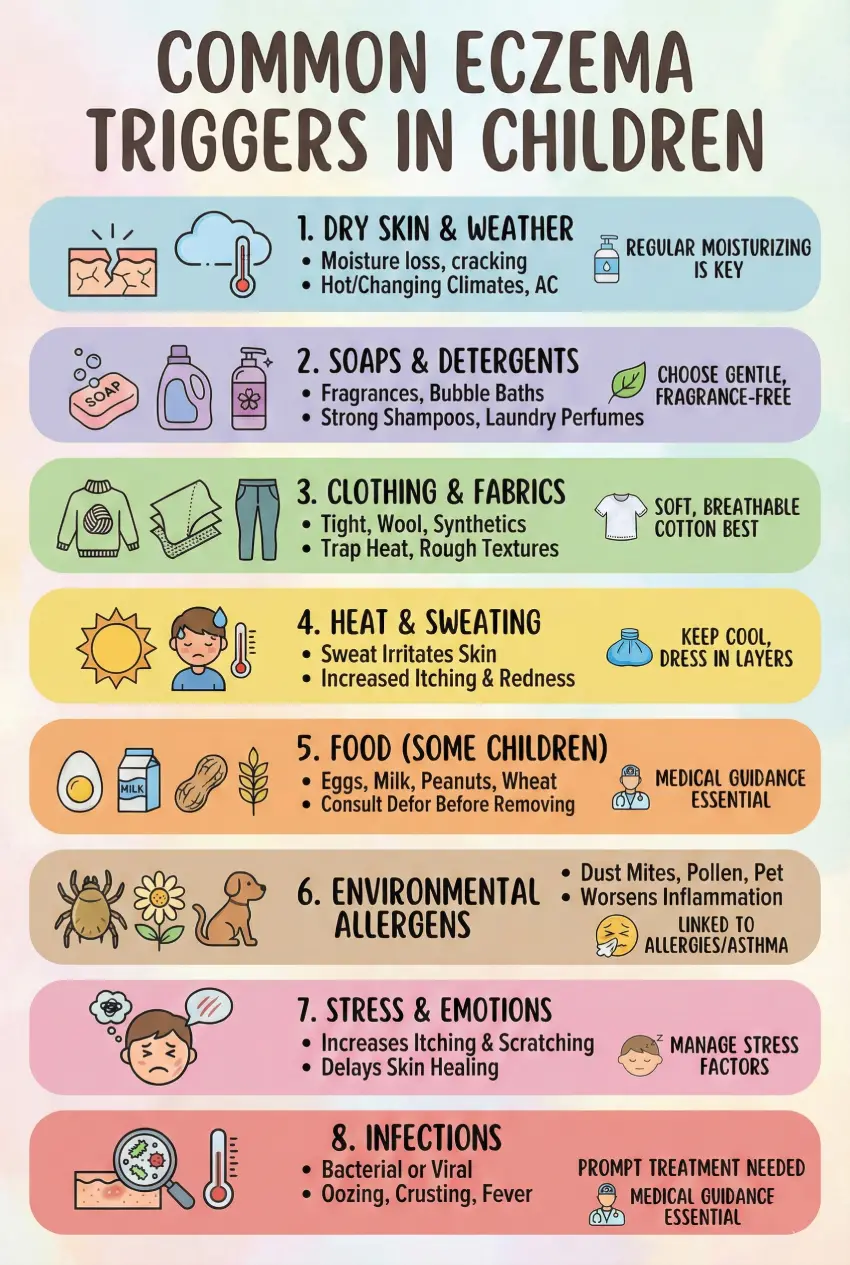
1. Dry Skin and Weather Changes
Dry skin is one of the biggest contributors to eczema flare-ups kids experience. When the skin becomes dry, it cracks more easily and allows irritants to penetrate.
In regions with air conditioning, hot climates, or sudden weather changes, moisture loss from the skin happens faster. This is particularly relevant for families living in warmer regions where indoor cooling is used frequently.
Regular moisturising is not optional for children with eczema. It is a core part of treatment.
2. Soaps, Detergents, and Skincare Products
Many everyday products can irritate sensitive skin.
Common culprits include:
- Fragranced soaps and body washes
- Bubble baths
- Strong shampoos
- Laundry detergents with perfumes
Even products labelled as “natural” can trigger reactions. Gentle, fragrance-free formulations are always preferred for children with eczema.
3. Clothing and Fabrics
What a child wears directly affects their skin.
Tight clothing, wool, and synthetic fabrics can trap heat and increase sweating, which worsens itching. Rough textures can irritate already inflamed skin.
Soft, breathable cotton clothing is usually the safest choice for children prone to eczema flare-ups.
4. Heat and Sweating
Heat is a well-known trigger for eczema. When children sweat, salt from sweat irritates the skin, leading to increased itching and redness.
This is a common issue in active children and in warmer climates. Managing body temperature, dressing in layers, and keeping skin cool can significantly reduce flare-ups.
5. Food Triggers in Some Children
Food does not cause eczema in all children, but in a subset, certain foods can worsen symptoms.
Commonly suspected foods include:
- Eggs
- Milk
- Peanuts
- Wheat
It is important to note that removing foods without proper evaluation can lead to nutritional deficiencies. Any dietary changes should be guided by a paediatrician or allergy specialist.
6. Environmental Allergens
Children with eczema are often sensitive to environmental allergens such as:
- House dust mites
- Pollen
- Pet dander
Exposure to these allergens can worsen skin inflammation, especially in children who also have allergic rhinitis or asthma.
This connection explains why eczema sometimes flares alongside seasonal allergies.
7. Stress and Emotional Factors
Stress is an often-overlooked trigger. Even young children can experience emotional stress that affects their immune system.
Stress can:
- Increase itching
- Worsen scratching behaviour
- Delay skin healing
School pressures, sleep disruption, and social discomfort can all contribute to flare-ups.
8. Infections
Bacterial or viral skin infections can trigger sudden and severe eczema flares.
Signs to watch for include:
- Oozing or crusting
- Sudden worsening redness
- Fever or discomfort
Prompt treatment is important, as infected eczema can escalate quickly.
Childhood Eczema Causes: Why Triggers Differ Between Children
The underlying cause of eczema is a combination of genetics and immune system sensitivity. This is why childhood eczema causes vary widely from one child to another.
Some children are more affected by environmental factors, while others react strongly to skincare products or food allergens. Keeping a flare-up diary can help parents identify patterns over time.
Atopic Dermatitis Triggers in Dubai: Local Factors to Consider
When discussing atopic dermatitis triggers in Dubai, climate plays a significant role.
Factors that commonly worsen eczema locally include:
- Hot weather and sweating
- Constant use of air conditioning
- Dry indoor air
- Increased exposure to dust
Children may need adjustments to skincare routines when seasons change or when travelling.
Scratching: The Cycle That Worsens Everything
Itching leads to scratching, and scratching damages the skin further. This creates a vicious cycle that keeps eczema active.
Keeping nails short, using anti-itch strategies, and managing triggers early helps break this cycle before flare-ups escalate.
Practical Tips to Reduce Eczema Flare-Ups
- Moisturise at least twice daily, even when skin looks normal
- Use gentle, fragrance-free products
- Dress children in breathable fabrics
- Keep bath time short and lukewarm
- Identify and manage individual triggers
Consistency is far more effective than reacting only during flares.
FAQs Parents Commonly Ask
Can children outgrow eczema?
Some children improve with age, but others may have eczema into adolescence or adulthood.
Is eczema contagious?
No. Eczema is not an infection and cannot spread to others.
Should steroid creams be avoided?
When used correctly and under medical guidance, they are safe and effective.
Does diet always affect eczema?
Only some children have food-related triggers. Testing and guidance are essential before dietary changes.
When to Seek Specialist Help
If eczema:
- Keeps returning despite good skincare
- Interferes with sleep or daily activities
- Becomes infected frequently
then specialist assessment can help identify triggers and optimise treatment.
Conclusion
Understanding and managing eczema in children starts with recognising the triggers that worsen flare-ups and addressing them consistently. If your child experiences frequent or severe eczema flare-ups and you want expert guidance on identifying triggers and long-term control, consult Dr. Mahesh Katre, Consultant Paediatrician and Paediatric Allergist in Dubai. You can contact the clinic on +971 55 232 9107 for personalised evaluation and support tailored to your child’s needs.