

A suspected medicine allergy can stay in a parent’s mind for years. Your child may have developed a rash after an antibiotic, swelling after a medicine, vomiting during an illness, or symptoms that appeared while they were already unwell, and suddenly that medicine gets added to the “avoid” list.
The difficult part is that not every reaction after taking medicine is a true allergy. Sometimes the rash is caused by the infection itself. Sometimes vomiting is a side effect. Sometimes the timing is unclear. And sometimes, a child carries an allergy label for years without anyone knowing if it is still accurate.
This is where a Drug Challenge Test may be recommended by an allergist.
It is a carefully supervised medical procedure used to check whether a child can safely tolerate a suspected medicine. For families, especially when the medicine is commonly needed, this test can bring clarity, reduce unnecessary fear, and help doctors make better treatment decisions in the future.
What Is a Drug Challenge Test?
A Drug Challenge Test is a supervised test where a child is given a suspected medicine in carefully planned doses while being closely monitored by an allergy specialist.
It is also known as a drug provocation test or medication challenge.
The purpose is to confirm whether the child truly reacts to the medicine or whether the medicine can be safely tolerated.
The test is usually considered when the allergist feels that the child’s history suggests a low or manageable risk. It is not done casually, and it is never something parents should attempt at home.
In simple words, a Drug Challenge Test helps answer an important question:
“Is this child truly allergic to this medicine?”
That answer matters because medication allergy labels can affect future treatment. If a child is wrongly labelled allergic to an important antibiotic or medicine, doctors may avoid using it even when it could be the most suitable option.
Why Might an Allergist Recommend a Drug Challenge?
An allergist may recommend a Drug Challenge when the child’s allergy history is unclear, the symptoms were mild, or the medicine is important for future care.
Many children are labelled as allergic to medications based on one past episode. But in real life, medicine reactions can be complicated.
For example:
- A child may develop a rash while taking antibiotics for a viral infection
- A child may vomit after medicine, but vomiting may be a side effect
- A child may have had symptoms years ago, and no one remembers the details clearly
- A child may have avoided a medicine for years without confirmation
- Test results may not give a clear answer for that medicine
In these situations, the allergist may assess whether a supervised Drug Challenge is suitable.
The aim is not to “try and see” without caution. The aim is to test in a controlled medical setting where symptoms can be recognised and treated quickly if needed.
Drug Challenge in Dubai: Why It Can Be Important for Families
A Drug Challenge in Dubai can be especially helpful for families who move between clinics, hospitals, schools, travel destinations, and emergency care settings.
In Dubai, children may receive treatment from different healthcare providers over time. If a medication allergy is listed in the child’s history, doctors may avoid that medicine automatically, even if the allergy was never confirmed.
This can affect treatment choices for common childhood concerns such as infections, fever, pain, or inflammation.
A proper drug allergy assessment helps families understand:
- Whether the medicine truly needs to be avoided
- Whether the child can take it safely in future
- Whether alternative medicines are needed
- What should be written in the child’s medical records
- What parents should tell schools, nurseries, and emergency doctors
For parents, this clarity can make future illness episodes less stressful.
Is a Drug Challenge Test the Same as a Skin Test?
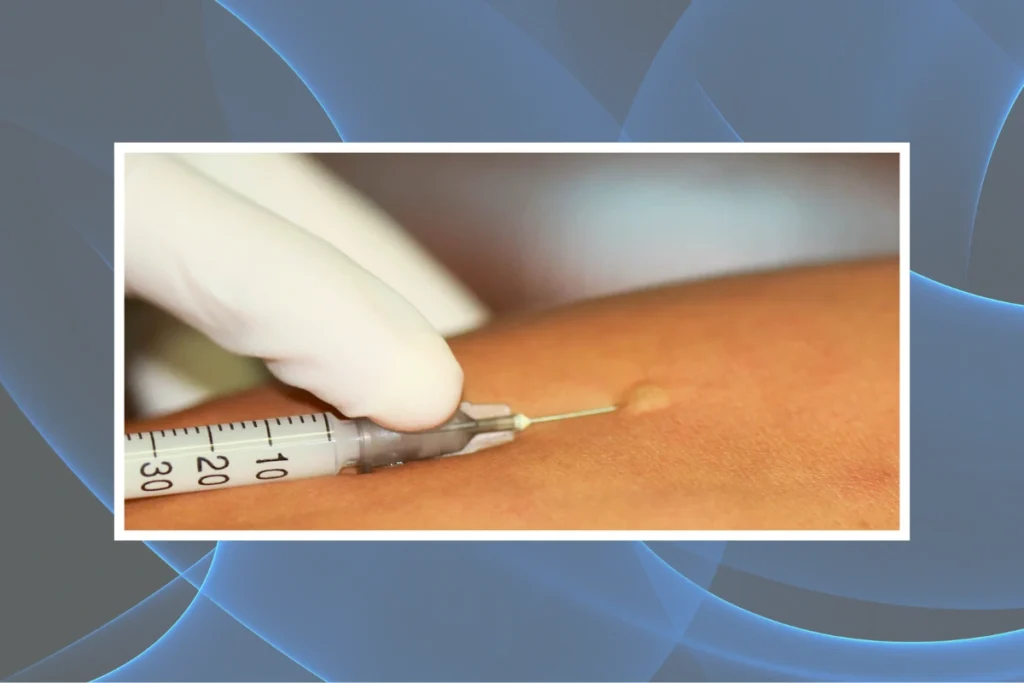
No. A Drug Challenge Test is not the same as a skin test.
A skin test checks how the immune system reacts when a tiny amount of a suspected substance is introduced to the skin. For some medications, skin testing can be useful.
But for many medicines, skin tests are not always available, reliable, or enough to give a final answer.
A Drug Challenge is different because the child actually receives the medicine under supervision. This allows the allergist to observe whether symptoms happen in real time.
Depending on the medicine and the child’s history, the allergist may recommend:
- No challenge because the risk is too high
- Skin testing first
- A Drug Challenge directly
- Avoidance of the medicine
- A different approach if the medicine is essential
The decision is always personalised.
Which Medicines Might Be Tested?
A Drug Challenge may be considered for different medicines, depending on the child’s reaction history and medical need.
Common examples include:
- Penicillin-type antibiotics
- Amoxicillin
- Amoxicillin-clavulanate
- Certain cephalosporin antibiotics
- Some fever or pain medicines
- Selected anti-inflammatory medicines
- Other medicines where allergy clarification is important
Antibiotic allergy evaluation is one of the common reasons parents may be referred to an allergist.
This is because many childhood rashes happen during infections, and the antibiotic may not always be the true cause.
Who Is Suitable for a Drug Challenge?
Not every child is suitable for a Drug Challenge Test.
Before recommending it, the allergist will review the child’s history in detail.
They may ask:
- Which medicine was taken?
- Why was the medicine prescribed?
- How many doses were taken before symptoms started?
- What symptoms appeared?
- How quickly did they appear?
- Did the child have fever or infection at that time?
- Was there rash, swelling, breathing difficulty, vomiting, or dizziness?
- Was emergency treatment needed?
- Has the child taken the medicine again since then?
- Does the child have asthma, eczema, food allergy, or previous anaphylaxis?
This history helps the allergist decide the risk level.
A child with a mild, unclear rash many years ago may be assessed differently from a child who had breathing difficulty or a severe skin reaction.
When Is a Drug Challenge Not Recommended?
A Drug Challenge is usually avoided if the previous reaction suggests a high risk of serious harm.
It may not be suitable if the child had:
- Severe blistering rash
- Skin peeling
- Mouth or eye ulcers
- Serious delayed drug reaction
- Organ involvement
- Severe breathing difficulty
- Shock or collapse
- A reaction where re-exposure is considered unsafe
It may also be postponed if the child is unwell on the day of the test.
For example, the test may be delayed if the child has fever, wheezing, vomiting, diarrhoea, uncontrolled asthma, or a severe eczema flare.
This is not about inconvenience. It is about safety.
A Drug Challenge should be done when the child’s health is stable, so symptoms can be monitored clearly.
What Happens Before the Procedure?
Before the procedure, the allergist will explain the test and give parents instructions.
Parents may be asked to bring:
- The name of the suspected medicine
- Previous prescriptions
- Hospital or emergency records, if available
- Photos of rash or swelling
- A list of medicines the child was taking at the time
- Details of the illness being treated
- Current medication list
- Allergy history, including food allergy, asthma, eczema, or anaphylaxis
The doctor may also give instructions about medicines that should be paused before the test.
For example, antihistamines may need to be stopped for a few days because they can hide early allergy symptoms.
However, parents should never stop any regular medicine without medical advice.
What Happens During a Drug Challenge Test?
The procedure is structured and supervised.
The exact steps may vary depending on the medicine, the child’s age, and the risk level, but the process usually follows a careful pattern.
Step 1: Initial Health Check
Before the test starts, the medical team checks whether the child is well enough to proceed.
They may ask about fever, cough, wheezing, rash, vomiting, diarrhoea, or any new symptoms.
If the child is unwell, the challenge may be rescheduled.
Step 2: First Small Dose
The child is given a very small amount of the medicine.
This may be only a fraction of the usual dose.
The aim is to begin cautiously and watch how the child responds.
Step 3: Observation
After the first dose, the child is observed for symptoms.
The team may monitor:
- Skin changes
- Itching
- Hives
- Swelling
- Cough
- Wheezing
- Vomiting
- Tummy pain
- Breathing changes
- Behaviour changes
- Dizziness or looking unwell
Parents are also encouraged to speak up if they notice anything unusual.
You know your child’s normal behaviour better than anyone.
Step 4: Gradual Dose Increase
If no concerning symptoms appear, the next dose may be given.
The dose is increased step by step until the planned dose is reached.
Some challenges may involve two doses. Others may involve more steps.
The allergist decides the protocol based on the child’s history and the medicine being tested.
Step 5: Final Observation
After the final dose, the child stays under observation for a set period.
This helps the medical team make sure there is no immediate reaction before the child goes home.
Parents may also receive instructions on what to watch for later that day or over the next few days, because some medication reactions can be delayed.
What Symptoms Do Doctors Watch For?
During a Drug Challenge, doctors watch for symptoms that may suggest an allergic reaction.
These may include:
- Hives
- Itching
- Red rash
- Swelling of lips, eyes, or face
- Throat discomfort
- Coughing
- Wheezing
- Vomiting
- Tummy pain
- Dizziness
- Pale appearance
- Breathing difficulty
- Sudden tiredness or unusual behaviour
In younger children, symptoms can be subtle.
A small child may not say, “My throat feels tight” or “I feel dizzy.” Instead, they may become quiet, clingy, irritated, or refuse to continue.
That is why observation by both parents and the medical team is important.
What If a Reaction Happens?
If symptoms appear, the allergist will assess them immediately.
The challenge may be stopped, and treatment may be given depending on the symptoms.
Treatment may include:
- Observation
- Antihistamine
- Inhaler treatment
- Other medicines if needed
- Emergency treatment if symptoms suggest a serious reaction
A reaction during the test may feel worrying, but it gives useful information.
It may confirm that the child should continue avoiding that medicine. It also helps the doctor update the child’s allergy plan and medical records accurately.
What If There Is No Reaction?
If the child reaches the planned dose and has no symptoms, the result is usually reassuring.
The allergist may advise that the child can use that medicine in the future, depending on the test result and clinical situation.
In some cases, the allergy label can be removed or updated.
This can make future medical care easier because doctors may no longer need to avoid that medicine unnecessarily.
However, parents should follow the allergist’s instructions carefully.
Passing one medicine does not automatically mean all related medicines are safe. The doctor will explain exactly what the result means.
Benefits of a Drug Challenge Test

A Drug Challenge can be very helpful when recommended for the right child.
1. It Can Confirm or Rule Out a Suspected Allergy
The biggest benefit is clarity.
Instead of living with uncertainty, parents can get a more confident answer about whether the child truly reacts to the medicine.
This helps avoid both unnecessary fear and unnecessary risk.
2. It Can Remove an Incorrect Allergy Label
Many children carry medication allergy labels for years.
If the test shows that the child tolerates the medicine, the allergy label may be removed or corrected.
This can be especially useful for antibiotic allergy labels.
3. It Can Improve Future Treatment Options
When a child is wrongly labelled allergic to a medicine, doctors may need to use alternatives.
Sometimes these alternatives may be less suitable, broader, more expensive, or not the first choice.
Confirming tolerance can give doctors more treatment options in future.
4. It Can Reduce Parent Anxiety
Medication allergy uncertainty can make every fever or infection feel more stressful.
Parents may worry about what medicine is safe, what to tell doctors, and what to avoid.
A clear result can reduce this anxiety.
5. It Can Help Schools and Caregivers
For children in school, nursery, camps, or with caregivers, clear allergy information is important.
If a medicine allergy is confirmed, caregivers need to know.
If it is ruled out, unnecessary warnings can be removed.
Both outcomes help everyone manage the child’s care better.
6. It Supports Better Child Allergy Management
A Drug Challenge is not just a test. It is part of a larger allergy care plan.
It helps the allergist guide the family on:
- Which medicines are safe
- Which medicines should be avoided
- What symptoms matter
- What to do in an emergency
- Whether the child needs written allergy instructions
- Whether follow-up is needed
This makes allergy care more practical and less confusing.
Can Parents Try a Drug Challenge at Home?
No. A Drug Challenge should not be tried at home unless an allergist has given a specific, low-risk home introduction plan.
A supervised Drug Challenge is done in a medical setting because reactions can be unpredictable.
At home, parents may not have the right medicines, monitoring, or emergency support if symptoms become serious.
Also, not every symptom is easy to interpret. A child may have anxiety, side effects, infection-related symptoms, or true allergy symptoms. The allergist’s role is to assess these carefully.
Drug Challenge in Dubai: Why Choose Specialist Care?
A Drug Challenge in Dubai should be planned by a trained allergy specialist who understands medication allergy, child health, and emergency allergy care.
This is especially important in children because their symptoms may be harder to describe and their rashes may be linked to infections rather than the medicine itself.
Dr Mahesh Katre is a UK-trained paediatrician and paediatric allergy specialist in Dubai with experience in food and drug allergies in children, oral food and antibiotic challenges, anaphylaxis care, allergy testing, desensitisation, immunotherapy, eczema, asthma, allergic rhinitis, and child allergy management.
His approach focuses on understanding the full clinical story before recommending any test.
For parents, that means the child is not treated based only on an old allergy label. The goal is to understand what really happened, what needs to be avoided, and what may be safe in the future.
Conclusion
A Drug Challenge Test can help confirm or rule out a suspected medication allergy and give parents clearer answers about what their child can safely take. For a Drug Challenge in Dubai with Dr Mahesh Katre, call or WhatsApp +971 55 232 9107 to book a consultation and get specialist guidance for your child’s medication allergy concerns.
FAQs About Drug Challenge Test
1. Is a Drug Challenge Test safe?
It can be safe when recommended for the right child and performed under specialist supervision. The allergist will assess the child’s history and risk before planning the test.
2. Is the test painful?
No. The test usually involves taking the medicine by mouth, often as syrup, tablet, or another suitable form. The child is then monitored closely.
3. How long does a Drug Challenge take?
It can take a few hours, depending on the medicine, number of doses, observation time, and the child’s response.
4. Can my child eat before the test?
Follow the clinic’s instructions. Advice may vary depending on the medicine being tested and the child’s age.
5. What happens if my child reacts?
The test is usually stopped, and the medical team treats the symptoms. The allergist will then explain what the reaction means and what medicines should be avoided.
6. What happens if my child does not react?
If the child tolerates the planned dose without symptoms, the allergist may advise that the medicine can be used in future. The allergy label may also be updated.
7. Can all drug allergies be tested this way?
No. Some reactions are too serious for a Drug Challenge. The allergist will decide whether the test is suitable.
8. Is this test useful for antibiotic allergy?
Yes, in selected children. Many suspected antibiotic allergies are not true allergies, especially when the reaction happened during an infection. A specialist assessment can help decide whether a challenge is appropriate.