


A child who repeatedly sneezes, wakes with a blocked nose, coughs at night, or develops wheezing around pets may have more than just “sensitive airways.”
Sometimes an environmental allergy is contributing to the symptoms.
Allergy testing for asthma or allergic rhinitis can help identify specific triggers such as house dust mites, pollen, pets or mould when the child’s history suggests an allergic pattern.
But testing should not be performed simply because a child has asthma or nasal symptoms. The useful question is not:
“What is my child allergic to?”
It is:
“Which allergens, if any, are actually contributing to my child’s symptoms?”
That distinction helps make the results useful rather than confusing.
How Are Allergies Connected to Asthma and Allergic Rhinitis?
Asthma and allergic rhinitis commonly occur together in children.
In allergic rhinitis, exposure to an allergen can cause inflammation inside the nose, leading to symptoms such as:
- Sneezing
- Runny nose
- Nasal blockage
- Itchy nose
- Itchy or watery eyes
In allergic asthma, exposure to certain allergens can contribute to airway symptoms such as:
- Wheezing
- Cough
- Chest tightness
- Shortness of breath
Common inhaled allergens associated with allergic rhinitis and allergic asthma include house dust mites, pollens, animal allergens and moulds.
However, not every child with asthma has allergic asthma, and not every blocked or runny nose is caused by allergy.
That is why the pattern of symptoms matters before allergy testing is considered.
When May Allergy Testing Be Helpful for Allergic Rhinitis?
Allergy testing becomes more useful when a child has symptoms that sound allergic and identifying the responsible trigger could change what the family does next.
For example, testing may be considered when a child has:
- Repeated sneezing and an itchy nose
- Clear, persistent nasal discharge
- Nasal congestion without an obvious infection
- Itchy, watery eyes along with nasal symptoms
- Symptoms that recur during particular seasons
- Symptoms that become worse in certain rooms or environments
- Symptoms after spending time around cats, dogs or other animals
- Persistent rhinitis that is affecting sleep, school or everyday activities
A detailed history often gives the first clues.
A child whose symptoms become worse every time they visit a home with a cat has a different pattern from a child whose nose is blocked every morning throughout the year.
Testing can then be chosen based on those clues.
When May Allergy Testing Be Considered in a Child With Asthma?
Allergy testing can be useful when the child’s asthma history suggests that environmental allergens may be contributing to symptoms or flare-ups.
Examples include:
Wheezing or coughing around animals
If symptoms repeatedly appear after exposure to cats or dogs, pet allergy may be worth investigating.
Symptoms that worsen in a particular environment
For example, a child may cough or wheeze more at home, in a bedroom, in a damp environment or after staying somewhere with pets.
A seasonal pattern
If asthma symptoms repeatedly worsen during a particular part of the year, pollen or another seasonal aeroallergen may be contributing.
Asthma together with allergic rhinitis
A child with asthma who also has frequent sneezing, nasal itching, congestion or watery eyes may have an allergic component affecting both the upper and lower airways.
Asthma that remains difficult to control
When a child continues to experience symptoms despite appropriate asthma treatment, it can be useful to review whether ongoing exposure to a relevant allergen is contributing.
Importantly, allergy testing is usually only one part of asthma assessment.
Asthma itself is evaluated using the child’s history, examination and, depending on age, objective tests such as FeNO, spirometry or bronchodilator reversibility. In children aged 5 to 16 where asthma remains suspected but initial objective testing has not confirmed the diagnosis, current BTS/NICE/SIGN guidance also includes selected allergy-related testing within the diagnostic pathway.
What Clues Suggest an Allergic Trigger?
Parents often provide the most useful information before any allergy test is performed.
Look for patterns such as:
“My child starts sneezing whenever we clean the bedroom.”
“His nose is blocked almost every morning.”
“She wheezes whenever she stays with grandparents who have a cat.”
“His eyes and nose become itchy at the same time every year.”
“Her asthma gets worse when we visit a particular house.”
These patterns give the allergist something specific to investigate.
Testing without this context may identify sensitisation that has nothing to do with the child’s actual symptoms.
House Dust Mites
House dust mites are microscopic organisms commonly found in household dust, particularly in bedding, mattresses, carpets and soft furnishings.
Children sensitised to house dust mites may have symptoms throughout the year rather than during one particular season.
Possible clues include:
- Morning sneezing
- Persistent nasal congestion
- Symptoms in the bedroom
- Night-time or early-morning respiratory symptoms
- Asthma or rhinitis that seems present throughout the year
If the child’s history and testing both support clinically relevant dust mite allergy, management can include practical measures to reduce exposure alongside appropriate medication.
The important part is the correlation.
A positive dust mite test in a child who has no symptoms related to that exposure does not automatically mean dust mites are responsible for every asthma or nasal symptom.
Pollen
Pollen allergy tends to create a different pattern.
Symptoms may become noticeably worse during particular seasons or after outdoor exposure.
Parents may notice:
- Frequent sneezing
- Itchy nose
- Watery or itchy eyes
- Runny nose
- Nasal blockage
- Coughing or wheezing during periods of higher exposure
Which pollens are relevant varies significantly according to geography and local vegetation.
That means respiratory allergy testing should reflect the environment in which the child actually lives rather than using the same large panel for every patient.
Allergy guidance specifically recommends choosing aeroallergens according to the clinical history and geographical relevance.
Pet Allergy
Parents sometimes assume a child cannot be allergic to a family pet because they have lived with the animal for years. But long-term exposure can produce ongoing symptoms rather than an obvious immediate reaction.
Pet allergens are proteins found in sources such as dander, saliva and urine. Cats and dogs can trigger both allergic rhinitis and asthma symptoms in sensitised children.
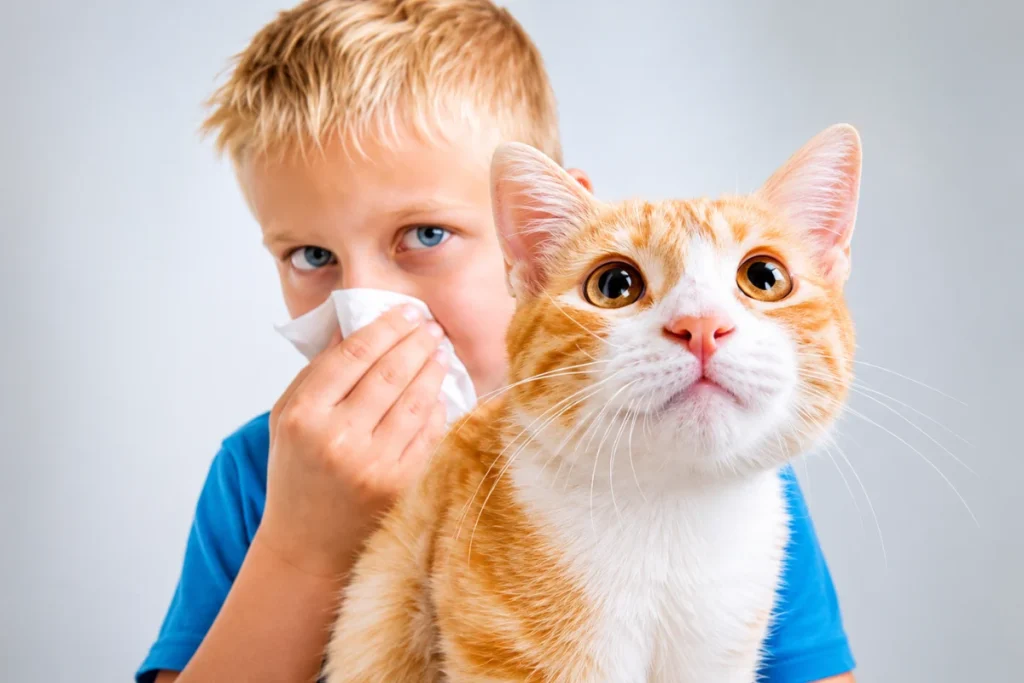
Possible clues include:
- Sneezing around the pet
- Itchy or watery eyes
- Persistent nasal congestion
- Cough
- Wheezing
- Chest tightness
Testing can be particularly useful here because it may prevent families from making unnecessary decisions.
For example, if a child has symptoms at home where there is a cat, testing may show that the clinically relevant allergy is actually house dust mite rather than cat allergen.
Moulds and Other Environmental Allergens
Mould exposure can contribute to respiratory allergy in some sensitised children.
Symptoms may be more noticeable in damp environments or buildings where mould exposure is significant.
Other aeroallergens may also be relevant depending on where the child lives.
The important principle remains the same:
The allergen should be selected because the child’s history suggests it may matter.
The purpose is not to test every possible substance in the environment.
A Positive Allergy Test Does Not Always Mean “This Is the Trigger”
This is one of the most important things parents need to understand.
Allergy testing looks for evidence of sensitisation.
Sensitisation means the immune system has produced IgE antibodies against a particular allergen.
But sensitisation and clinically important allergy are not always the same thing.
Imagine a child who:
- Has nasal symptoms only during a particular pollen season
- Tests positive to both pollen and house dust mite
- Has no year-round symptoms
The pollen result may fit the history much better than the dust mite result.
Conversely, a child who has symptoms every morning throughout the year may have a pattern more consistent with an indoor allergen.
Guidance for allergic rhinitis therefore emphasises that positive results must always be interpreted alongside the timing and pattern of symptoms.
Why Broad Respiratory Allergy Panels Are Not Always Helpful
Parents may understandably think:
“Why not just test everything?”
The problem is that more testing does not necessarily provide more useful information.
Testing many allergens without considering the child’s history increases the likelihood of finding positive results that are not actually causing symptoms.
That can lead families to:
- Worry about allergens that may not matter
- Make unnecessary lifestyle changes
- Remove pets without good reason
- Buy expensive environmental products
- Focus on allergy while missing other causes of symptoms
The best testing strategy starts with the child’s history and then asks specific questions.
For example:
Do the symptoms fit dust mite exposure?
Is there a seasonal pollen pattern?
Do symptoms reliably worsen around the family cat?
Testing then helps confirm or challenge that suspicion.
What About Smoke, Perfume, Pollution or Cold Air?
These are important respiratory triggers, but they are different from allergens.
Children with asthma or sensitive airways may develop symptoms after exposure to:
- Cigarette or vape smoke
- Air pollution
- Strong perfumes
- Cleaning fumes
- Cold air
- Exercise
- Viral infections
- Weather changes
These triggers can worsen asthma without causing an IgE-mediated allergic reaction.
Standard allergy testing therefore will not tell you whether your child’s asthma is triggered by perfume, smoke, cold weather or exercise.
AAAAI similarly distinguishes common allergens such as dust mites, pollen and animal dander from non-allergic asthma triggers such as smoke, pollution and cold air.
This is another reason a detailed history remains essential.
How Can Allergy Test Results Change the Management Plan?
Allergy testing is most useful when the result leads to a practical decision.
More targeted trigger reduction
If a clinically relevant house dust mite allergy is confirmed, the family can focus on realistic dust mite reduction measures rather than trying to eliminate every possible trigger from the home.
If pet allergy is confirmed and exposure clearly worsens symptoms, the discussion can focus specifically on ways of reducing that exposure.
Better understanding of seasonal symptoms
Identifying a pollen allergy may help explain why symptoms repeatedly appear during certain times of the year and allow treatment to be planned around expected exposure.
More focused medication planning
Understanding whether nasal and asthma symptoms have an allergic component can help the medical team plan appropriate treatment for both conditions.

Considering allergen immunotherapy
In selected children with clinically significant allergic rhinitis, and sometimes allergic asthma, identifying the responsible allergen may also help determine whether allergen immunotherapy is worth considering.
Immunotherapy requires more than a positive test. There should be a clear relationship between allergen exposure and symptoms together with evidence of sensitisation to that specific trigger.
Why Treating Allergic Rhinitis Matters in a Child With Asthma
The nose and lungs are part of the same respiratory system.
It is therefore common for children with allergic asthma to also have allergic rhinitis.
Parents sometimes focus heavily on the wheeze while accepting a constantly blocked or runny nose as something the child simply has to live with.
But identifying and managing rhinitis is an important part of the overall respiratory assessment.
If a child has asthma together with persistent nasal symptoms, it is worth looking at both conditions rather than treating them as completely separate problems.
When Is Allergy Testing Less Likely to Help?
Testing may be less useful when:
- Symptoms occur only during obvious viral infections
- There is no pattern suggesting allergen exposure
- Symptoms are mainly triggered by exercise, pollution, perfume or smoke
- A child has no respiratory or allergic symptoms and testing is being requested only as screening
- The result would not change management
Testing should answer a real clinical question.
A large list of positive results without context is not a management plan.
Questions Parents Can Think About Before an Allergy Appointment
Before your child is assessed, it can help to notice:
- Are symptoms present all year or only during certain seasons?
- Are mornings or nights worse?
- What happens around cats or dogs?
- Do symptoms change when your child sleeps somewhere else?
- Does cleaning or dust exposure make symptoms worse?
- Are itchy eyes and sneezing present as well as cough or wheeze?
- Are symptoms worse outdoors?
- Is asthma also triggered by infections or exercise?
- Are there places where the child consistently feels better or worse?
These observations can sometimes be more valuable than a long panel of tests.
Frequently Asked Questions On Allergy Testing for Asthma
Does every child with asthma need allergy testing?
No. Allergy testing may be useful when the history suggests that environmental allergens are contributing to asthma symptoms or when identifying a trigger would change the management plan. Asthma diagnosis and monitoring still require appropriate clinical and objective assessment.
Which allergies commonly trigger childhood asthma?
Common allergic triggers include house dust mites, animal allergens, pollens and moulds. The allergens that matter for an individual child depend on their environment and symptom pattern.
When should a child with allergic rhinitis be tested?
Testing may be helpful when symptoms are persistent or troublesome, the trigger is unclear, symptoms show a clear environmental or seasonal pattern, or identifying the allergen would influence avoidance measures or consideration of immunotherapy.
Can allergy testing tell how severe my child’s asthma will be?
No. The size of a skin-test reaction or level of allergen-specific IgE does not directly tell you how severe the child’s asthma or rhinitis will be. The result needs to be interpreted in the context of symptoms and exposure.
Can allergy testing identify sensitivity to pollution or perfume?
No. Pollution, cigarette smoke, strong smells and perfume can trigger respiratory symptoms, but they are generally irritants rather than IgE allergens and are not diagnosed through routine allergy testing.
If my child tests positive to our pet, do we automatically need to remove the pet?
Not necessarily. The result first needs to be compared with the child’s actual symptoms and exposure pattern. A positive test confirms sensitisation, but the clinical relevance needs to be established before major decisions are made.
When Should You Consider a Respiratory Allergy Assessment?
If your child has recurring nasal symptoms, persistent sneezing or congestion, asthma that seems to worsen around particular environmental exposures, or both asthma and allergic rhinitis, identifying relevant allergic triggers may help make the management plan more specific.
The aim is not simply to produce a list of positive allergy results.
It is to understand whether a particular allergen is genuinely contributing to your child’s symptoms and whether knowing that changes what you do next.
For families dealing with recurring asthma or nasal allergy symptoms, Dr. Mahesh Katre can review the child’s symptom pattern, environmental exposures and asthma or rhinitis history before deciding whether targeted respiratory allergy testing would add useful information.
When testing is appropriate, the results can then be used alongside the clinical history to guide sensible trigger reduction, treatment and, in selected cases, discussion about allergen immunotherapy.
The most useful allergy test is not the one that finds the greatest number of positives. It is the one that helps explain the child’s symptoms and leads to a clearer management plan.