
When a child has reacted to a food before, even a tiny bite can make parents nervous. A spoonful of yoghurt, a piece of cake, a peanut-containing snack, or a school lunch can suddenly bring back the memory of rashes, swelling, vomiting, coughing, or a worrying trip to the doctor.
For many families, the hardest part is not only the allergy itself. It is the uncertainty. Is the food truly unsafe? Has the child outgrown the allergy? Was the blood test or skin test enough? Is the family avoiding a food unnecessarily? These are real questions, and this is where an Oral Food Challenge Test can help give clearer answers.
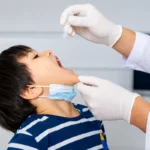
An Oral Food Challenge is a supervised medical procedure where a child eats small, gradually increasing amounts of a suspected food allergen while being closely monitored by an allergy specialist and medical team.
It is not a casual food trial. It is not something parents should try at home. It is a carefully planned test used in child allergy management when the doctor needs to understand how the child’s body responds to a particular food in real time.
For parents in Dubai, this can be especially helpful. Children here are often exposed to different cuisines, school snacks, nursery meals, birthday parties, travel, and family gatherings. A clear diagnosis can make everyday food decisions safer, calmer, and more practical.
What Is an Oral Food Challenge Test?
An Oral Food Challenge Test is a medically supervised test used to check whether a child reacts to a specific food when they eat it.
The child is given the suspected food in very small measured amounts. If there is no reaction, the amount is slowly increased at planned intervals.
During the test, the doctor and team watch for any symptoms, such as itching, hives, swelling, vomiting, coughing, wheezing, throat discomfort, or changes in behaviour.
The test may be used for foods such as:
- Milk
- Egg
- Peanut
- Tree nuts
- Wheat
- Soy
- Sesame
- Fish
- Baked milk
- Baked egg
- Other suspected food triggers
The exact food and the way it is given depend on the child’s history, previous reaction, allergy test results, age, health condition, and overall risk assessment.
Why Is an Oral Food Challenge Needed?
Parents often assume that a positive allergy test means the child is definitely allergic. But in real allergy practice, it is not always that simple.
Skin prick tests and blood allergy tests can show sensitisation. This means the immune system has recognised a food. But sensitisation does not always mean the child will react when eating that food.
For example, a child may have a positive test to egg but may tolerate baked egg in muffins. Another child may have avoided milk for years but may no longer be allergic. Sometimes, a child may have had symptoms after eating a mixed meal, and it is not clear which food caused the reaction.
An Oral Food Challenge can help answer these questions more clearly.
It may be recommended when:
- The diagnosis is uncertain
- Test results and symptoms do not match clearly
- The child may have outgrown an allergy
- The family is avoiding a food without a confirmed allergy
- The doctor wants to assess tolerance to a baked form of a food
- A clearer food allergy plan is needed for school, nursery, or travel
The aim is not to “test bravery.” The aim is to get clarity safely.
Oral Food Challenge in Dubai: Why Specialist Supervision Matters
An Oral Food Challenge in Dubai should always be performed under the care of a trained allergy specialist in a proper medical setting.
This is because the child is being given a food that may cause a reaction.
Most reactions, when they happen during a supervised challenge, are mild and can be treated quickly. But serious reactions, including anaphylaxis, can happen. That is why the medical team needs to be ready with the right medicines, equipment, and emergency plan.
Specialist supervision is important because the doctor must decide:
- Whether the child is suitable for the test
- Which food form should be used
- How much food should be given
- How quickly the dose should be increased
- When to stop the challenge
- What symptoms are important
- How to treat a reaction if it happens
- What instructions parents should follow afterwards
This is especially important for children with asthma, eczema, previous anaphylaxis, multiple food allergies, or unclear reaction histories.
Step 1: The Pre-Challenge Consultation
The procedure does not begin on the test day. It begins with a detailed consultation.
Before recommending an Oral Food Challenge Test, the pediatric allergy specialist will first review your child’s complete allergy history.
Parents may be asked questions like:
- What food caused concern?
- How much did the child eat?
- How quickly did symptoms appear?
- What symptoms happened?
- Did the child develop hives, swelling, vomiting, cough, wheeze, or breathing difficulty?
- Was emergency treatment needed?
- Has the child eaten the food again since then?
- Does the child have asthma, eczema, allergic rhinitis, or other allergies?
- What did the skin prick test or blood test show?
This step is very important because not every child is suitable for a food challenge immediately.
Sometimes, the doctor may decide that the risk is too high at that time. In other cases, the doctor may suggest repeating allergy tests first or waiting until asthma or eczema is better controlled.
Step 2: Checking If the Child Is Ready

On the day of the Oral Food Challenge, the medical team will check whether your child is well enough to proceed.
The test may need to be postponed if the child has:
- Fever
- Cough or chest symptoms
- Wheezing
- Recent asthma flare
- Vomiting or diarrhoea
- Severe eczema flare
- Recent allergic reaction
- Unusual tiredness or illness
- Poorly controlled allergy symptoms
This can feel frustrating for parents who have planned the appointment, but postponing is sometimes the safest choice.
A child who is already unwell may be harder to assess during the test. Some symptoms of illness can also be confused with allergy symptoms.
The goal is to perform the challenge when the child’s baseline health is stable.
Step 3: Medicine Review Before the Test
Before the test, parents are usually given instructions about medicines.
Some medicines, especially antihistamines, may need to be stopped for a few days before the challenge because they can hide early allergy symptoms.
However, parents should never stop medication on their own.
The doctor will guide you based on your child’s condition and the medicine being used.
You should inform the allergy specialist if your child is taking:
- Antihistamines
- Asthma inhalers
- Steroids
- Eczema medicines
- Cough or cold medicines
- Any long-term medication
- Recent antibiotics
- Any emergency allergy medication
For children with asthma, good control is especially important before a food challenge. If asthma is not well controlled, the procedure may be delayed.
Step 4: Preparing the Food
In some cases, the clinic may provide the food. In other cases, parents may be asked to bring the food in a specific form.
This could be:
- Cow’s milk
- Yoghurt
- Cooked egg
- Baked egg muffin
- Peanut butter
- Nut paste
- Wheat-based food
- Sesame-containing food
- A specific food the child previously reacted to
Parents should follow the instructions exactly.
Do not change the brand, recipe, quantity, or form of the food unless the clinic advises it.
This matters because different forms of a food can behave differently in allergy care. For example, baked egg and lightly cooked egg are not the same from an allergy perspective. Baked milk and fresh milk are also not the same.
The allergy specialist will decide which form is suitable for the child.
Step 5: Starting With a Very Small Dose
Once the team confirms that the child is well and ready, the challenge begins.
The first dose is usually very small. It may be a tiny amount of the food, much smaller than a normal serving.
This first step helps the medical team observe whether the child reacts even to a small exposure.
Parents are usually asked to stay nearby and watch the child calmly. It is helpful to avoid making the child anxious, because worry can sometimes cause symptoms like tummy discomfort, throat awareness, or restlessness.
The doctor and team will monitor the child’s skin, breathing, behaviour, comfort level, and any symptoms reported by the child or parent.
Step 6: Waiting and Monitoring Between Doses
After each dose, there is a waiting period.
This is not wasted time. It is one of the most important parts of the Oral Food Challenge.
During this time, the team watches for symptoms such as:
- Itching
- Hives
- Redness
- Swelling of lips, eyes, or face
- Sneezing
- Coughing
- Throat discomfort
- Voice change
- Wheezing
- Tummy pain
- Nausea
- Vomiting
- Dizziness
- Looking pale or tired
- Behaviour changes in younger children
In very young children, symptoms may not always be clearly described. A toddler may become clingy, quiet, irritable, or suddenly refuse food.
That is why the team does not rely only on what the child says. They observe the child closely.
Step 7: Gradually Increasing the Dose
If there are no concerning symptoms, the next dose is given.
The dose is gradually increased step by step. Each step is planned, and the child is observed between doses.
This continues until the child either:
- Completes the planned amount without symptoms, or
- Develops symptoms that suggest a reaction
The pace of the challenge depends on the clinic protocol and the child’s risk level.
Some challenges take longer than others. A simple open food challenge may be completed within a few hours, while certain cases may need longer observation.
Parents should avoid rushing the process. The slow pace is part of what makes the test safer.
Step 8: What Happens If Symptoms Appear?
If symptoms appear during the Oral Food Challenge Test, the doctor will assess them carefully.
Not every symptom means the child is having a true allergic reaction. For example, mild tummy discomfort, anxiety, or dislike of the food may need careful interpretation.
However, if the doctor sees signs of an allergic reaction, the challenge may be stopped.
Treatment depends on the type and severity of symptoms.
The child may need:
- Observation only
- Antihistamine
- Inhaler treatment
- Anti-vomiting medicine in selected cases
- Adrenaline if symptoms suggest anaphylaxis
- Longer monitoring before going home
Parents should not panic if the challenge is stopped. A reaction gives the doctor useful information.
It helps confirm that the food may still be unsafe and guides the next steps in child allergy management.
Step 9: What Happens If There Is No Reaction?
If the child completes the full planned amount without symptoms, the test is usually considered passed.
This can be a big relief for parents.
But it does not mean parents should go home and freely introduce every related food.
The doctor will explain exactly what the result means.
For example:
- Passing baked egg may mean baked egg can be included, but not necessarily lightly cooked egg
- Passing baked milk may not mean fresh milk is safe
- Passing one nut does not mean all nuts are safe
- Passing one food does not remove the need for caution with other known allergens
The allergy specialist may advise regular intake of the tolerated food to maintain tolerance. The frequency, amount, and form should be followed as instructed.
Step 10: Observation After the Final Dose
Even after the final dose, your child will usually stay in the clinic for observation.
This is because some reactions may not appear immediately.
The observation time depends on the food tested, the child’s risk level, symptoms during the challenge, and the doctor’s protocol.
If the child had no symptoms, the observation period may be shorter.
If the child reacted, the team may monitor them for longer until symptoms settle and the doctor feels it is safe to go home.
For some types of food allergy, such as FPIES, reactions may be delayed, so observation and instructions may differ.
How Long Does an Oral Food Challenge Take?
Parents should usually plan for several hours.
It is better to keep the day free rather than booking school, work, or another appointment immediately afterwards.
The total time depends on:
- The food being tested
- The number of doses
- Waiting time between doses
- The child’s symptoms
- Whether treatment is needed
- The required observation period after the final dose
Bring something quiet to keep your child comfortable.
Helpful items include:
- Books
- Colouring materials
- A favourite toy
- Tablet with headphones
- Extra clothes
- Water, if allowed
- Safe snacks, if advised by the clinic
The aim is to keep the child calm and settled.
What Should Parents Tell the Child?
This depends on the child’s age.
For younger children, keep it simple.
You can say, “The doctor is going to help us check if this food is safe for your body.”
For older children, explain that they will eat small amounts slowly, and the doctor will watch carefully to make sure they are safe.
Avoid frightening words like “dangerous” or “severe reaction” in front of an anxious child unless the doctor advises a specific explanation.
At the same time, do not promise that nothing will happen. A balanced explanation is best.
You can say, “If your body feels uncomfortable, we will tell the doctor right away.”
What Parents Should Watch For During the Test
Parents know their child’s normal behaviour better than anyone.
During the test, tell the medical team if you notice:
- Sudden scratching
- Lip licking or mouth discomfort
- Voice change
- Coughing
- Unusual quietness
- Irritability
- Tummy pain
- Refusal to continue eating
- Sleepiness
- Looking pale
- Any symptom that feels unusual
Do not feel that you are overreacting.
During an Oral Food Challenge, even small observations can help.
The doctor will decide whether the symptom is important or not.
What Happens After the Test?
After the challenge, the doctor will discuss the result with you.
There are usually two main outcomes.
If the Challenge Is Negative
A negative challenge means your child tolerated the tested food during the procedure.
The doctor may advise how to introduce that food at home, how often it should be eaten, and what form is suitable.
Parents should follow the plan carefully.
Continuing the food regularly may be important in some cases to maintain tolerance.
If the Challenge Is Positive
A positive challenge means the child developed symptoms that suggest the food still needs to be avoided.
The doctor may update the allergy plan and discuss:
- What food to avoid
- How to read labels
- What to do after accidental exposure
- Whether emergency medication is needed
- Whether the school or nursery plan should be updated
- When to repeat allergy testing
- Whether future reassessment may be possible
This result may feel disappointing, but it gives valuable clarity.
It is safer to discover the reaction in a supervised setting than unexpectedly at school, home, or a restaurant.
Can an Oral Food Challenge Be Done at Home?
A true Oral Food Challenge should not be done at home.
This is especially important if the child has had:
- Hives
- Swelling
- Vomiting
- Breathing difficulty
- Wheezing
- Throat symptoms
- Dizziness
- Anaphylaxis
- A strong positive allergy history
In some low-risk cases, the doctor may advise a home food introduction plan. But that is different from a supervised Oral Food Challenge Test.
Parents should not decide this on their own.
If there is any doubt, speak to a pediatric allergy specialist before trying the food.
Why This Test Can Be So Reassuring for Parents
Many parents arrive for the test feeling nervous. That is completely understandable.
Food allergies can affect everyday life in small but constant ways.
Parents may worry about lunch boxes, birthday cakes, hidden ingredients, restaurant meals, school trips, playdates, and travel.
An Oral Food Challenge can help reduce guesswork.
It may show that a food is safe. Or it may confirm that avoidance is still needed.
Either way, parents leave with clearer guidance.
And that clarity is often what families need most.
Choosing the Right Pediatric Allergy Specialist in Dubai
Food allergy testing is not only about running a test. It is about understanding the child’s full allergy story.
A good assessment looks at the child’s reaction history, test results, skin symptoms, breathing health, growth, diet, school routine, family anxiety, and future safety plan.
Dr. Mahesh Katre is a UK-trained paediatrician and pediatric allergy specialist in Dubai with experience in food allergies, drug allergies, anaphylaxis care, allergy testing, oral food and antibiotic challenges, desensitisation, immunotherapy, eczema, asthma, allergic rhinitis, FPIES, and respiratory allergies.
For parents, this means the focus is not just on one test result. The focus is on building a practical, safe, and personalised allergy plan for the child.
Conclusion
An Oral Food Challenge Test can give families clearer answers when food allergy results and real-life symptoms do not tell the full story. For an Oral Food Challenge in Dubai with Dr. Mahesh Katre, call or WhatsApp +971 55 232 9107 to book a consultation with a pediatric allergy specialist in Dubai and get a safer, clearer plan for your child.
FAQs About the Oral Food Challenge Test
1. Is the Oral Food Challenge Test painful?
No, the test itself is not painful. The child eats small measured amounts of food. However, if an allergic reaction occurs, symptoms may be uncomfortable and will be treated by the medical team.
2. How long does the procedure take?
It usually takes several hours because the food is given gradually and the child is observed between doses and after the final dose.
3. Can my child eat before the test?
Follow the clinic’s instructions. Some children may be asked to avoid a heavy meal before the test, but this depends on age, food type, and clinic protocol.
4. Should antihistamines be stopped before the test?
Antihistamines may need to be stopped before the test, but only under medical advice. Do not stop any medicine without checking with your doctor.
5. What if my child refuses to eat the food?
This can happen, especially with younger children. The team may try child-friendly ways to offer the food, but if the child cannot continue, the test may need to be paused or rescheduled.
6. Is the test safe?
The test is designed to be done safely in a supervised medical setting. However, allergic reactions can happen, which is why trained professionals with emergency care available should perform it.
7. What does it mean if my child passes?
It means your child tolerated that specific food in that specific form during the test. The doctor will explain how to continue the food at home.
8. What does it mean if my child reacts?
It suggests the food may still need to be avoided. The doctor will treat the symptoms, stop the challenge if needed, and explain the next steps.
9. Can this test show if my child has outgrown an allergy?
Yes, in selected cases. If the child’s history and test results suggest improvement, an Oral Food Challenge may help check whether the allergy has resolved.