


For years, food allergy management mainly focused on one strategy: avoid the trigger food and be prepared in case of accidental exposure.
Today, food allergy immunotherapy offers another option for some children. But immunotherapy does not simply replace avoidance. In many cases, both approaches work together.
The right choice depends on your child’s allergy, reaction history, age, overall health, and how much the allergy affects everyday life.
What Does Food Allergy Avoidance Mean?
Food allergy avoidance means keeping a confirmed allergen out of your child’s diet.
This may involve:
- Checking food labels carefully
- Asking about ingredients when eating outside
- Preventing cross-contact where necessary
- Informing schools, nurseries, and caregivers
- Carrying emergency medication when prescribed
- Having a clear allergy or anaphylaxis action plan
Avoidance remains an important part of food allergy management. However, it does not change the underlying allergy. If your child accidentally eats enough of the allergen, a reaction can still occur.
This is one reason some families consider whether food allergy immunotherapy may offer additional protection.
What Is Food Allergy Immunotherapy?
Food allergy immunotherapy aims to increase the amount of an allergen a child can tolerate before developing an allergic reaction.
One of the most commonly discussed approaches is oral immunotherapy, or OIT.
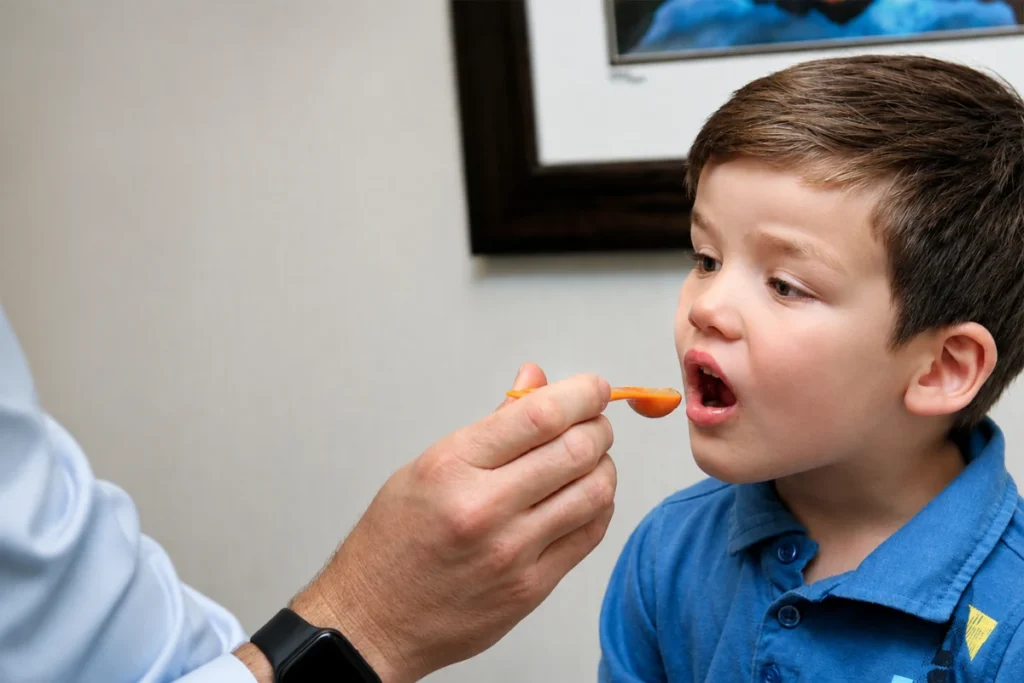
During OIT, carefully measured amounts of the allergenic food are given according to a structured treatment plan. The amount is gradually increased until a maintenance dose is reached. The goal is called desensitisation.
In simple terms, desensitisation aims to raise the child’s reaction threshold. For example, a child who previously reacted to a very small amount of peanut may be able to tolerate a larger amount after successful treatment.
This may provide additional protection if accidental exposure happens.
Immunotherapy vs Avoidance: What Is the Main Difference?
The biggest difference lies in what each approach is trying to achieve.
Allergy avoidance
The aim is to prevent exposure to the allergen.
The child continues to avoid the food and remains prepared for accidental reactions.
Food allergy immunotherapy
The aim is to increase the amount of allergen the child can tolerate through controlled exposure.
It may reduce sensitivity, but it does not necessarily mean the child can freely eat the allergen afterwards.
That distinction is important.
Food allergy immunotherapy is generally not viewed as a guaranteed cure.
Allergy Avoidance vs Food Allergy Immunotherapy
| Comparison Factor | Allergy Avoidance | Food Allergy Immunotherapy |
|---|---|---|
| Primary goal | Avoid exposure to the allergen | Increase the amount of allergen the child can tolerate |
| How it works | The child avoids the confirmed allergy-triggering food | Carefully measured amounts of the allergen are given under a structured treatment plan |
| Allergen exposure | The allergen is avoided | Controlled exposure is part of treatment |
| Effect on sensitivity | Does not change the underlying sensitivity | May reduce sensitivity and raise the reaction threshold |
| Protection from accidental exposure | Protection depends on successfully avoiding the allergen | May provide additional protection against certain accidental exposures |
| Can the child eat the food freely? | No | Not necessarily; treatment does not automatically mean unrestricted eating |
| Daily management | Food labels, ingredient checks, cross-contact precautions, and caregiver communication | Regular treatment doses plus continued allergy safety precautions |
| Emergency medication | May still be required if prescribed | May still be required if prescribed |
| Treatment commitment | Requires ongoing vigilance to avoid the allergen | Requires regular dosing, follow-up, and adherence to the treatment plan |
| Risk of reactions | Reactions can still occur after accidental exposure | Allergic reactions can also occur during treatment |
| Specialist supervision | Needed for accurate diagnosis and management planning | Specialist assessment and supervision are important |
| Suitable for every child? | Avoidance is a core part of food allergy management | No; suitability depends on the child and allergy |
| Long-term outcome | Manages the allergy by preventing exposure | Aims for desensitisation, but is not necessarily a permanent cure |
| Impact on daily life | May require ongoing caution at school, restaurants, parties, and social events | May add treatment responsibilities while potentially reducing sensitivity to accidental exposure |
| Best next step | Continue when appropriate based on diagnosis and individual circumstances | Discuss candidacy, risks, benefits, and treatment goals with an allergist |
Allergy avoidance focuses on preventing exposure, while food allergy immunotherapy focuses on increasing tolerance through controlled exposure. In some children, immunotherapy may be used alongside continued allergy avoidance and safety precautions.
Does Immunotherapy Mean My Child Can Stop Avoiding the Food?
Usually, no.
This is one of the most important expectations to understand before starting treatment. For many children, the goal of oral immunotherapy is not unrestricted eating. It may instead be to provide greater protection against accidental exposure.
A child undergoing OIT may still need to:
- Avoid the food outside the prescribed dose
- Check labels
- Inform caregivers and schools
- Carry emergency medication if prescribed
- Follow an allergy action plan
- Take treatment doses consistently
The exact plan depends on the allergen, the child, and the treatment protocol being followed.
What Are the Benefits of Allergy Avoidance?
Avoidance is appropriate for many children and families. It does not intentionally expose the child to a food known to cause an allergic reaction, and it can be very effective when the allergen is easy to identify and avoid.
Avoidance may be a reasonable approach when:
- The allergy may resolve naturally with age
- The allergen is relatively easy to avoid
- The family is comfortable managing the allergy
- Immunotherapy is not suitable for the child
- The family does not want the commitment involved in treatment
However, complete avoidance is not always easy. Children eat at school, attend parties, travel, visit friends, and eat food prepared by other people. Accidental exposure can happen even in very careful families. For some parents, that uncertainty creates significant anxiety.
What Are the Potential Benefits of Food Allergy Immunotherapy?
The main potential benefit of immunotherapy is increasing the child’s reaction threshold. This may offer greater protection against small accidental exposures.
Depending on the child and the allergen, potential benefits may include:
- Reduced sensitivity to the allergen
- Greater protection from accidental exposure
- Increased confidence around food-related situations
- Less anxiety about very small or trace exposures for some families
- A possible improvement in quality of life
However, the benefits vary between children. The aim and expected outcome should always be discussed clearly before treatment begins.
What Are the Limitations of Oral Immunotherapy?
OIT requires commitment from both the child and family.
Treatment may involve:
- Regular doses at home
- Clinic visits
- Gradual dose increases
- Long-term maintenance
- Following specific instructions around dosing
- Monitoring for allergic reactions
Reactions can occur during treatment. Some may be mild, while others can be more significant. This is why oral immunotherapy should not be tried casually at home without specialist guidance. Parents also need to understand that successful desensitisation does not always mean the allergy has permanently disappeared.
Is Oral Immunotherapy Suitable for Every Child?
No. Not every child with a food allergy is a suitable candidate for immunotherapy. Before considering treatment, the first question is whether the child actually has a clinically relevant food allergy.
A pediatric allergy assessment may consider:
- What happened during previous reactions
- How quickly symptoms appeared
- How much food was eaten
- Which symptoms occurred
- Allergy test results
- Other allergic conditions such as asthma
- Whether the child already tolerates certain forms of the food
- Whether the allergy may resolve naturally
- Previous oral food challenge results
- The family’s expectations and treatment goals
This is important because a positive allergy test alone does not always confirm that a child will react when the food is eaten.
Why Accurate Diagnosis Matters
Before choosing between allergy avoidance and immunotherapy, it is important to confirm the diagnosis. Skin prick and blood tests can help, but results should be considered alongside the child’s reaction history.
If the diagnosis is unclear, a supervised oral food challenge may help determine whether the child truly reacts to a food.
Remember, a food challenge is used to clarify the diagnosis, while immunotherapy aims to reduce sensitivity through controlled exposure.
The key question is: What does your child genuinely need to avoid?
What About Milk and Egg Allergy?
Milk and egg allergies require particularly careful assessment because some children naturally outgrow them over time.
Some children may also tolerate baked forms of milk or egg while still reacting to less-heated forms.
This does not automatically mean the allergy has completely resolved.
The child’s age, reaction history, test results, current level of tolerance, and likelihood of natural resolution all need to be considered before deciding whether continued avoidance, supervised introduction, food challenge, or immunotherapy is appropriate.

How Do You Decide Between Immunotherapy and Avoidance?
There is no single answer that works for every child. The decision should consider both medical factors and how the allergy affects the family’s daily life.
Useful questions to discuss with your child’s allergist include:
- How certain is the food allergy diagnosis?
- How severe have previous reactions been?
- How likely is accidental exposure?
- Could my child naturally outgrow this allergy?
- What would immunotherapy achieve in my child’s case?
- What are the possible side effects?
- How long will treatment take?
- What happens if doses are missed?
- Will my child still need to avoid the allergen?
- Will emergency medication still be required?
For some children, careful avoidance may remain the most suitable approach.
For others, immunotherapy may offer additional protection and reassurance.
The decision should be based on the child’s individual situation rather than fear or pressure.
Which Is Better: Immunotherapy or Avoidance?
Neither option is automatically “better.”
Avoidance remains a core part of food allergy management.
Food allergy immunotherapy may offer an additional layer of protection for selected children by increasing the amount of allergen they can tolerate.
And importantly, the two approaches are not always opposites.
A child undergoing immunotherapy may still need to avoid uncontrolled exposure, carry emergency medication, and follow the same allergy safety precautions.
The more useful question is:
What approach gives this particular child the safest and most practical long-term plan?
That answer begins with an accurate diagnosis and a careful discussion about risks, benefits, expectations, and everyday life.
Discuss Your Child’s Food Allergy Treatment Options
If your child has a confirmed or suspected food allergy and you are unsure whether continued avoidance is enough, or whether food allergy immunotherapy may be an option, a detailed assessment can help clarify the next step.
Dr. Mahesh Katre, Pediatrician & Allergist in Dubai, can review your child’s reaction history, previous allergy testing, current food restrictions, and overall allergy profile to help determine the most appropriate management approach.
Whether the next step involves continued avoidance, further allergy testing, a supervised food challenge, or consideration of immunotherapy, the aim is to create a plan that is safe, practical, and appropriate for your child.
Frequently Asked Questions about Food Allergy Treatment
1. Can food allergy immunotherapy cure my child’s allergy?
Food allergy immunotherapy is mainly used to achieve desensitisation. This means increasing the amount of allergen a child may tolerate before reacting. It should not be viewed as a guaranteed cure.
2. Can my child eat the allergen normally after OIT?
Not necessarily. For many children, the aim is increased protection from accidental exposure rather than unrestricted eating. The child’s allergist will explain what is appropriate after treatment.
3. Can allergic reactions happen during immunotherapy?
Yes. Allergic reactions can occur during treatment, which is why oral immunotherapy needs appropriate specialist supervision and an emergency management plan.
4. Does my child still need to avoid the food during immunotherapy?
In many cases, yes. The prescribed treatment dose is different from eating the allergen freely. Families should follow the specific plan provided by their allergy team.
5. Is oral immunotherapy suitable for all food allergies?
No. Suitability depends on the allergen, age, reaction history, test results, other health conditions, and the individual treatment goals.
6. How can I know which approach is right for my child?
A detailed pediatric allergy assessment can help confirm the diagnosis and clarify whether avoidance, further testing, a supervised food challenge, or immunotherapy should be considered.