

Family trips should feel exciting and stress-free but for parents of children with food allergies, travel often comes with extra planning and worry. From checking labels and packing safe snacks to thinking through meal options and emergency situations, even a simple trip can feel overwhelming without the right preparation.
The good news is that travelling with food allergies can be safe and manageable with a few smart steps. In this blog, I’ll share practical tips on what to pack, how to prepare for flights and hotels, which snacks to carry, and how to stay ready in case of an allergic reaction so your family can travel with more confidence and less stress.
Why Travelling Can Feel More Stressful for Allergy Families
At home, most parents already have a routine. You know which foods are safe, where to shop, what restaurants to avoid, and how to respond if symptoms appear. Travel changes that comfort zone.
Suddenly, you are dealing with:
- unfamiliar foods
- language barriers
- packaged snacks with different labels
- airport meals or airline food
- social pressure from relatives or other travellers
- limited access to medical help in unfamiliar places
This is why travelling with an allergic child often feels mentally exhausting for parents, even before the trip begins.
The key is to shift from reactive thinking to proactive planning. If you prepare the food, the environment, and the emergency response before you travel, you reduce last-minute panic and make the journey smoother for everyone.
Start with a Simple Pre-Travel Allergy Plan
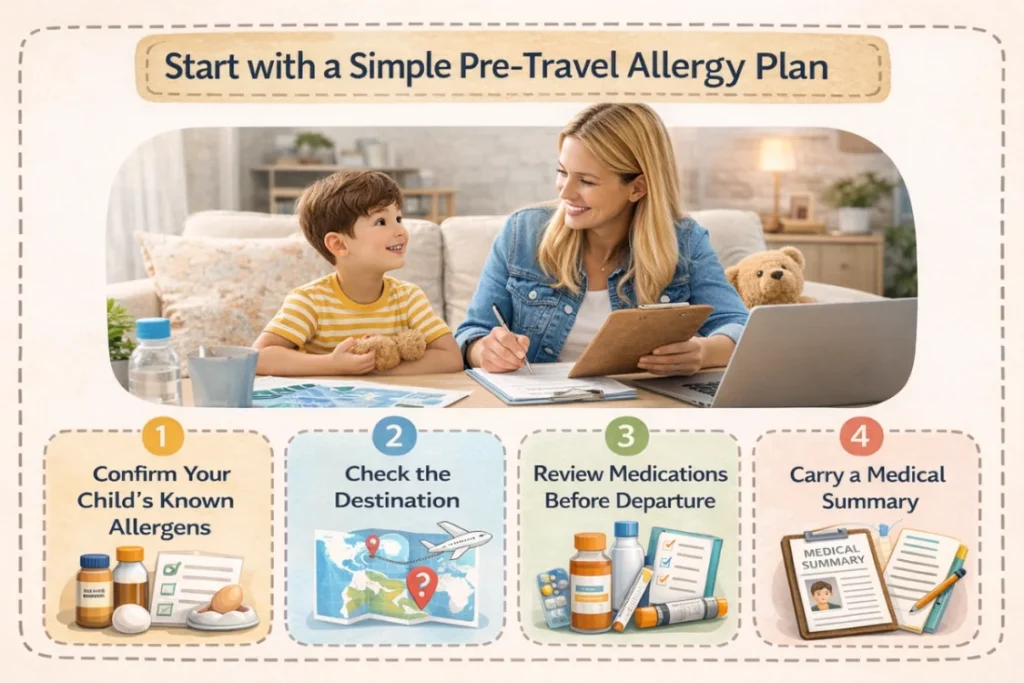
Before any trip, it helps to think like a doctor and a parent at the same time: what are the likely triggers, and what are the practical steps to reduce exposure?
A simple pre-travel plan should include:
1. Confirm Your Child’s Known Allergens
Make a clear written list of:
- foods that must be strictly avoided
- previous severe reactions
- whether your child has asthma as well
- medications currently prescribed
- what symptoms usually appear first
This becomes very useful if another caregiver, grandparent, or school staff is travelling with you.
2. Check the Destination
Research:
- food availability
- nearby pharmacies
- nearest hospital or emergency clinic
- whether local restaurants understand allergen requests
- language issues when travelling internationally
3. Review Medications Before Departure
Check expiry dates on:
- adrenaline auto-injectors (if prescribed)
- antihistamines
- inhalers
- eczema creams if relevant
- steroid medications if part of your doctor’s plan
Do not discover an expired emergency medication halfway through your trip.
4. Carry a Medical Summary
A short printed note can help in urgent situations. It should mention:
- your child’s allergy diagnosis
- severe triggers
- medications
- doctor’s advice for emergency response
This is especially useful in airports, hotels, and emergency rooms.
Safe Snacks: Your Best Travel Companion
One of the smartest things parents can do is to never rely fully on “finding something safe later.” Travel delays happen. Flights get postponed. Restaurants may not understand cross-contamination. Hungry children are more likely to accept unsafe foods out of frustration.
That is why carrying safe, familiar snacks is one of the most effective safety habits.
Good Travel Snack Principles
Choose snacks that are:
- already tested and tolerated by your child
- easy to carry
- not messy
- non-perishable where possible
- individually packed
- easy to identify quickly during travel
Safe Snack Ideas (Depending on Your Child’s Allergy Profile)
Always choose based on what is personally safe for your child, but common options may include:
- fresh fruit like bananas or apples
- homemade sandwiches with safe ingredients
- plain crackers or allergy-safe biscuits
- roasted chickpeas if legumes are tolerated
- rice cakes
- Oat bars made at home with known ingredients
- plain popcorn (if safe and age-appropriate)
- yoghurt pouches if refrigeration is available
- dry cereal your child already uses
- safe muffins or pancakes prepared at home
- vegetable sticks with a safe dip
If you are planning air travel, flying with allergy-safe snacks should be packed in a separate, easy-access pouch, not buried deep inside checked luggage. Keep enough for delays, diversions, and longer-than-expected waits. A good rule is to carry at least 1.5 to 2 times more than you think you will need.
Flying with a Child Who Has Allergies: What Parents Should Do
Flights can be particularly stressful because you are in a confined space, with limited control over food and delayed access to emergency help.
Here are the most practical steps:
Book Smart
- If possible, choose direct flights to reduce transit stress.
- Earlier flights in the day may reduce cumulative delays.
- If your child has a history of severe reactions, plan generously and avoid tight layovers.
Inform the Airline in Advance
Contact the airline ahead of time and ask:
- whether allergen-free meals are available
- whether they can avoid serving specific foods nearby (not always guaranteed)
- Whether you may pre-board to wipe down surfaces
- their policy regarding emergency medication on board
Important: never assume airline requests guarantee a safe environment. They may help, but they do not replace your own precautions.
Wipe Down High-Touch Surfaces
Before your child sits down, clean:
- tray table
- armrests
- seatbelt buckle
- screen area
- window ledge if they touch it often
This matters because allergen residue can sometimes remain on surfaces.
Avoid Airline Meals Unless You Are Fully Confident
Even when a meal appears safe, ingredient certainty and cross-contact can still be concerns. If your child has significant food allergies, bringing your own food is usually safer.
Keep Emergency Medicines in Cabin Luggage
Never put essential medications in checked baggage.
Keep them:
- with you
- easy to reach
- clearly labelled
- known to every adult travelling with the child
This is not just convenience. It is a safety rule.
What Should Be in a Travel Allergy Emergency Kit?
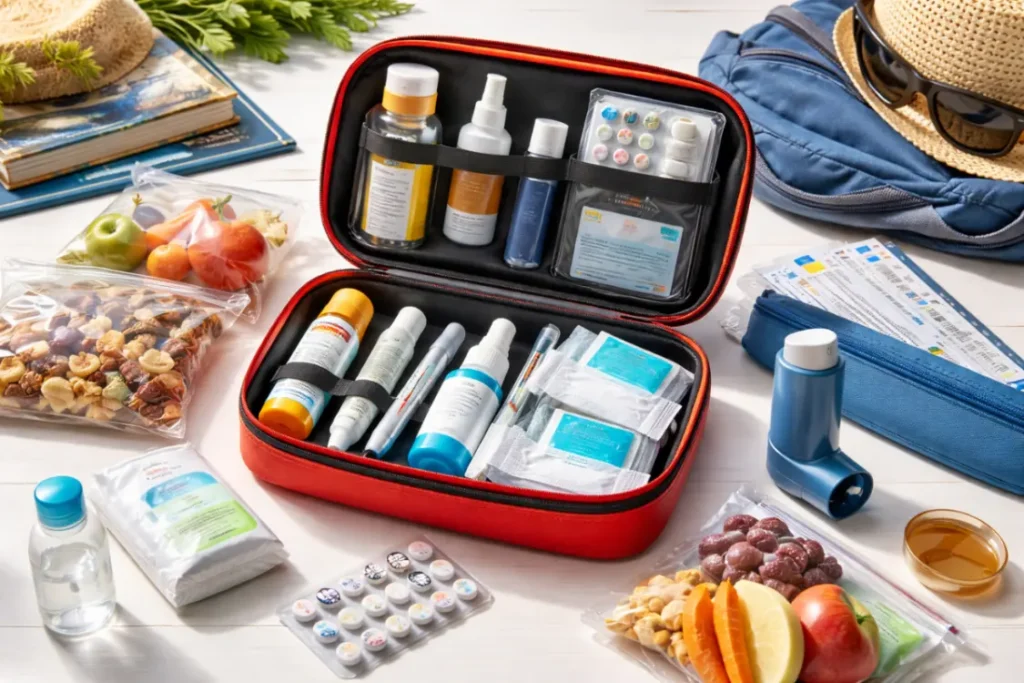
Every parent of a child with a moderate-to-severe food allergy should travel with a clear and organised food-allergy travel emergency kit. This should be one dedicated pouch or bag that is always accessible, not spread across multiple suitcases.
What to Pack
Depending on your child’s doctor’s advice, this may include:
- prescribed adrenaline auto-injector(s)
- non-drowsy antihistamine
- Reliever inhaler if your child has asthma
- spacer device if needed
- steroid medication if previously advised in your allergy action plan
- saline wipes or tissues
- printed allergy action plan
- list of allergens
- emergency contact numbers
- your child’s medical summary
- spare copy of prescriptions
- small safe snacks
- hand sanitiser (for general hygiene, not as a substitute for cleaning allergen residue)
How Many Auto-Injectors?
If your child has been prescribed adrenaline auto-injectors, carry at least two, especially on longer trips. In some reactions, a second dose may be needed while waiting for emergency medical care.
Keep It Accessible
Your emergency kit should be:
- in your cabin bag during flights
- in the car with you, not in the trunk
- with the primary caregiver during outings
- easy for both parents to locate instantly
In an emergency, seconds matter.
Eating Out While Travelling: Reduce Risk Without Removing the Joy
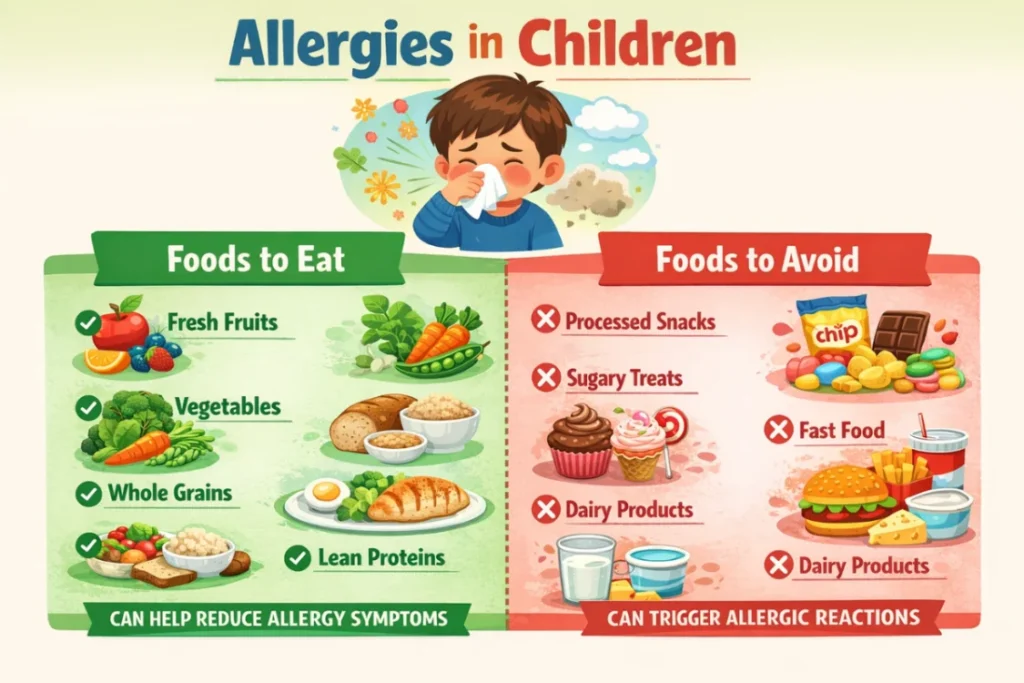
Food is often a big part of family travel, but this is also where many accidental exposures happen.
Before You Sit Down
Ask simple, direct questions:
- Does this dish contain [specific allergen]?
- Is it prepared separately?
- Is there a risk of cross-contact in the kitchen?
- Can you check the ingredients?
Avoid vague questions like “Is this okay for allergies?” Be specific.
Choose Simpler Foods
Complex sauces, desserts, mixed dishes, and buffet foods often carry more uncertainty.
Safer choices are often:
- grilled plain proteins
- simple rice dishes
- plain vegetables
- fruit
- meals with fewer ingredients
Avoid Buffets for High-Risk Allergies
Shared serving spoons and accidental mixing make buffets a common source of risk.
If You Are Not Confident, Do Not Force It
Parents sometimes feel awkward asking too many questions. Please do not. It is always better to be “too careful” than to regret a preventable reaction.
Hotel and Stay Tips That Parents Often Forget
Where you stay can influence food safety more than many parents realise.
Helpful Hotel Choices
If possible, choose accommodation with:
- a small kitchenette
- fridge access
- microwave
- nearby supermarket
- clear housekeeping support
This allows you to prepare simple meals and store safe foods.
Important Hotel Precautions
- Inform the hotel in advance about your child’s allergies
- Ask if rooms can avoid welcome snacks containing allergens
- Clean eating surfaces if your child snacks in the room
- Keep medicines visible and accessible
- If using shared breakfast spaces, supervise closely
For some families, self-catering apartments may be more practical than full hotel dining.
Teach Your Child Age-Appropriate Travel Safety
Part of safe travel is not just parent preparation. It is also helping your child understand their own safety in a calm, age-appropriate way.
Depending on age, children can learn to:
- say “I cannot eat that”
- ask “Does this have milk, egg, peanut, or nuts?”
- Never swap snacks with other children
- Tell an adult immediately if their mouth feels itchy or strange
- recognise early symptoms they have felt before
Children do not need to feel frightened. They need to feel informed and supported.
This is one of the most valuable allergy travel tips for parents because confident children often make safer choices when routines change.
When to Seek Urgent Medical Help While Travelling
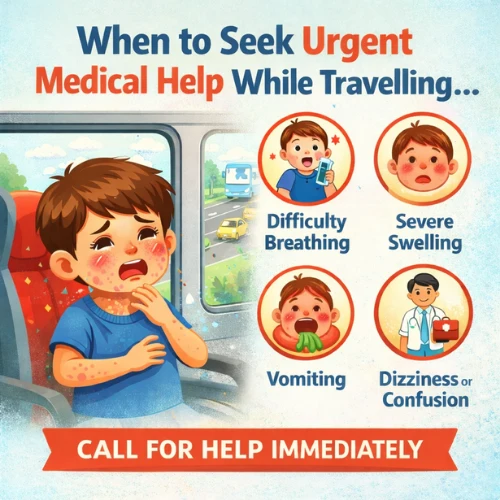
Do not delay medical attention if your child develops:
- breathing difficulty
- wheezing
- throat tightness
- voice change
- lip or tongue swelling
- Repeated vomiting after exposure
- sudden drowsiness
- floppy behaviour in younger children
- Rapid spread of hives with other symptoms
- signs of collapse or faintness
If adrenaline is prescribed and your child meets the criteria in the action plan, use it promptly and seek emergency care immediately.
Many parents hesitate because they hope symptoms will “settle.” In severe allergic reactions, early treatment matters.
Final Thoughts for Parents
Travelling with a child who has allergies needs planning, but it should never stop your family from making memories. With safe snacks, clear communication, and an emergency plan, travel can feel much safer and less stressful.
If your child has food allergies and you want a personalised travel plan before your next trip, book a consultation with Dr Mahesh Katre. Call +971 55 232 9107.