

As a parent, one of the most stressful parts of raising a child is figuring out whether a fever, cough, rash, or upset stomach is “just a minor issue” or something that needs medical attention. The truth is, common childhood illnesses are part of growing up, but knowing what to watch for can help you act early, avoid complications, and feel more confident in your decisions.
Children are more likely to catch infections and develop everyday health concerns because their immune systems are still maturing. While many of these conditions improve with rest, fluids, and supportive care, some need proper evaluation, targeted treatment, or follow-up. This guide will help parents understand the 10 common illnesses in children, what symptoms to look out for, how doctors diagnose them, and when it is time to seek medical care.
Why Childhood Illnesses Need Proper Attention
Many parents wait and watch, which is often reasonable for mild symptoms. But when symptoms persist, worsen, or keep recurring, a professional assessment becomes important. A child’s symptoms can overlap across different conditions. For example, a cough could be due to a simple viral infection, asthma, allergic rhinitis, or even pneumonia.
This is why understanding childhood disease symptoms and treatment is not just about recognising the illness; it is also about knowing when home care is enough and when medical guidance is essential.
1. Common Cold (Upper Respiratory Viral Infection)
What it is
The common cold is one of the most frequent illnesses seen in children, especially in toddlers and school-going kids.
Common symptoms
- Runny or blocked nose
- Sneezing
- Mild fever
- Sore throat
- Cough
- Reduced appetite
- Mild irritability
How it is diagnosed
Diagnosis is usually clinical, based on symptom history and examination. Most children do not need blood tests or scans for a simple cold.
Treatment
- Plenty of fluids
- Rest
- Saline nasal drops or spray
- Fever control with age-appropriate medication
- Humidified air in some cases
When to worry
If the child has breathing difficulty, high fever lasting more than 3 days, poor feeding, lethargy, or symptoms worsening instead of improving, they should be assessed by a paediatrician.
2. Fever with Viral Infection
What it is
Many childhood fevers are caused by viral infections. Fever itself is a symptom, not a disease, and can occur with colds, flu-like illnesses, viral throat infections, and stomach bugs.
Common symptoms
- Fever
- Tiredness
- Reduced appetite
- Body discomfort
- Irritability
- Sometimes vomiting or loose stools
How it is diagnosed
The doctor evaluates:
- Temperature pattern
- Duration of fever
- Associated symptoms
- Hydration status
- Physical examination findings
Tests may be needed if the fever is prolonged, unexplained, or associated with red flags.
Treatment
- Fluids to prevent dehydration
- Fever reducers as advised
- Monitoring activity and urine output
- Observation for new symptoms
When to worry
Any baby under 3 months with a fever needs urgent evaluation. Older children also need review if fever is persistent, associated with rash, poor responsiveness, breathing difficulty, seizures, or dehydration.
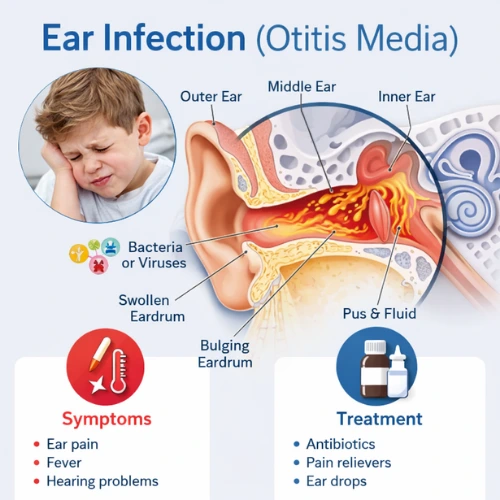
3. Ear Infection (Otitis Media)
What it is
Middle ear infections are very common in young children, especially after a cold.
Common symptoms
- Ear pain
- Tugging or pulling the ear
- Fever
- Irritability
- Poor sleep
- Reduced hearing temporarily
- Sometimes, fluid discharge from the ear
How it is diagnosed
A paediatrician examines the ear with an otoscope to look for redness, bulging, or fluid behind the eardrum.
Treatment
- Pain relief
- Observation in mild cases
- Antibiotics when indicated
- Follow up if symptoms do not improve
When to worry
If your child has severe pain, swelling behind the ear, repeated infections, or discharge, a prompt review is important.
4. Gastroenteritis (Stomach Infection)
What it is
Gastroenteritis is usually caused by a virus and leads to vomiting, diarrhoea, or both. It is especially common in younger children.
Common symptoms
- Vomiting
- Loose stools
- Stomach cramps
- Fever
- Poor appetite
- Tiredness
- Reduced urine output if dehydrated
How it is diagnosed
Most cases are diagnosed clinically. The doctor mainly looks for dehydration and assesses how severe the illness is.
Treatment
- Oral rehydration solution
- Small, frequent sips of fluids
- Continue feeding where possible
- Avoid sugary drinks
- Medications only if specifically advised
When to worry
Signs of dehydration include dry mouth, no tears when crying, sunken eyes, very low urine output, unusual sleepiness, or refusal to drink.
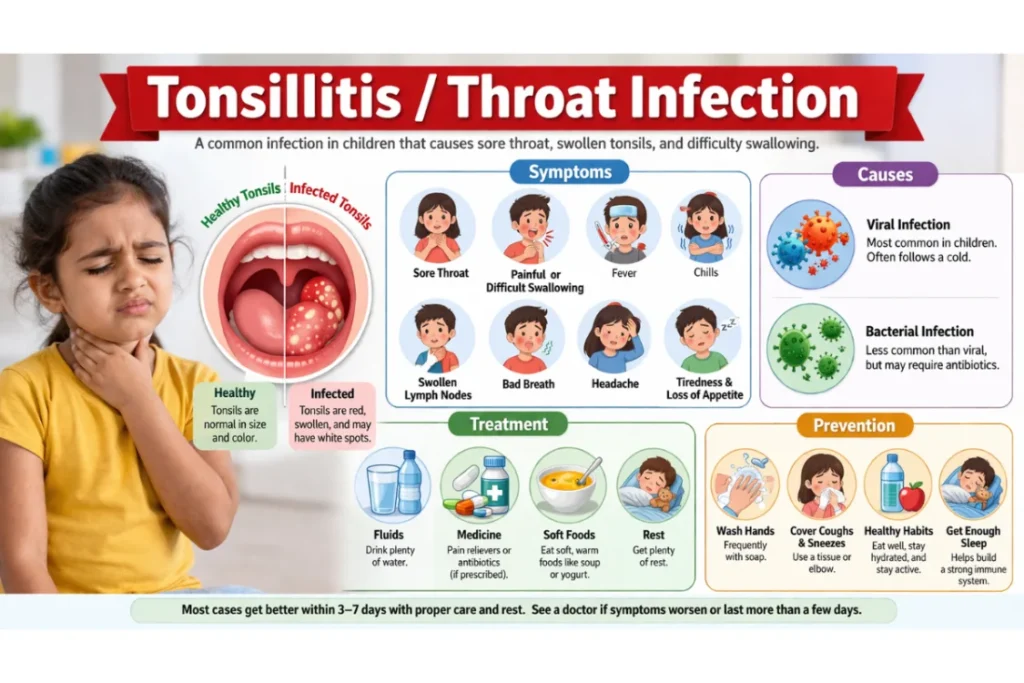
5. Tonsillitis / Throat Infection
What it is
Throat infections can be viral or bacterial. Some children get recurrent tonsillitis, especially during school years.
Common symptoms
- Sore throat
- Fever
- Pain while swallowing
- Enlarged tonsils
- Bad breath
- Swollen neck glands
- Reduced appetite
How it is diagnosed
A doctor examines the throat and checks for fever, swollen glands, tonsil appearance, and hydration. In some cases, a throat swab may be needed.
Treatment
- Pain and fever relief
- Fluids and soft foods
- Antibiotics are only used if a bacterial infection is suspected or confirmed
When to worry
If your child is drooling, unable to swallow, breathing noisily, or refusing all fluids, urgent assessment is needed.
6. Hand, Foot and Mouth Disease
What it is
This is a common viral illness in young children, especially in nurseries and schools.
Common symptoms
- Fever
- Mouth ulcers
- Painful swallowing
- Rash or blisters on hands and feet
- Reduced appetite
- Fussiness
How it is diagnosed
Diagnosis is usually based on the typical pattern of mouth sores plus rash on hands and feet.
Treatment
- Pain relief
- Cool fluids
- Soft foods
- Rest
- Monitoring hydration
When to worry
If the child is refusing fluids because of painful mouth ulcers or appears dehydrated, they should be seen by a doctor.
7. Conjunctivitis (Pink Eye)
What it is
Conjunctivitis is inflammation of the eye lining and may be viral, bacterial, or allergic.
Common symptoms
- Red eyes
- Watery or sticky discharge
- Itching
- Eyelid crusting
- Mild discomfort
How it is diagnosed
The type is often identified through symptom pattern, discharge, and associated cold or allergy symptoms.
Treatment
- Gentle cleaning of discharge
- Lubricating drops if advised
- Antibiotic eye drops only when needed
- Allergy treatment is linked to allergic triggers
When to worry
If there is severe pain, light sensitivity, swelling around the eye, blurred vision, or one eye looks significantly worse, seek medical attention promptly.
8. Asthma or Recurrent Wheeze
What it is
Children may develop wheezing episodes with viral infections, allergies, exercise, or asthma. This is particularly important in children with eczema, allergic rhinitis, or a family history of allergies.
Common symptoms
- Recurrent cough, especially at night
- Wheezing
- Chest tightness
- Shortness of breath
- Symptoms after a cold or exercise
How it is diagnosed
Diagnosis is based on:
- Pattern of repeated symptoms
- Trigger history
- Allergy background
- Examination
- In older children, lung function testing may help
Treatment
- Inhalers (reliever or preventer, depending on the case)
- Spacer devices
- Trigger control
- Allergy management when relevant
- Follow-up for proper asthma action planning
When to worry
Fast breathing, chest pulling in, difficulty speaking, bluish lips, or poor response to inhalers are urgent signs.
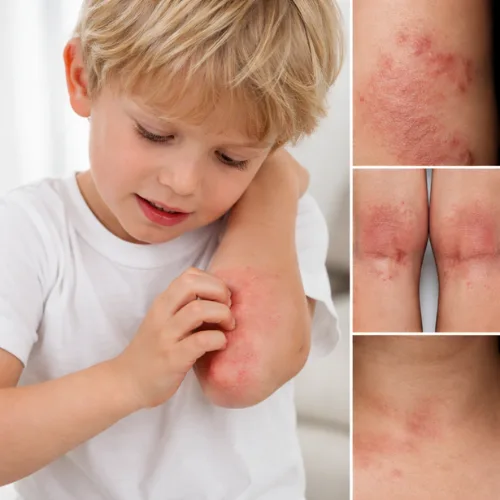
9. Eczema (Atopic Dermatitis)
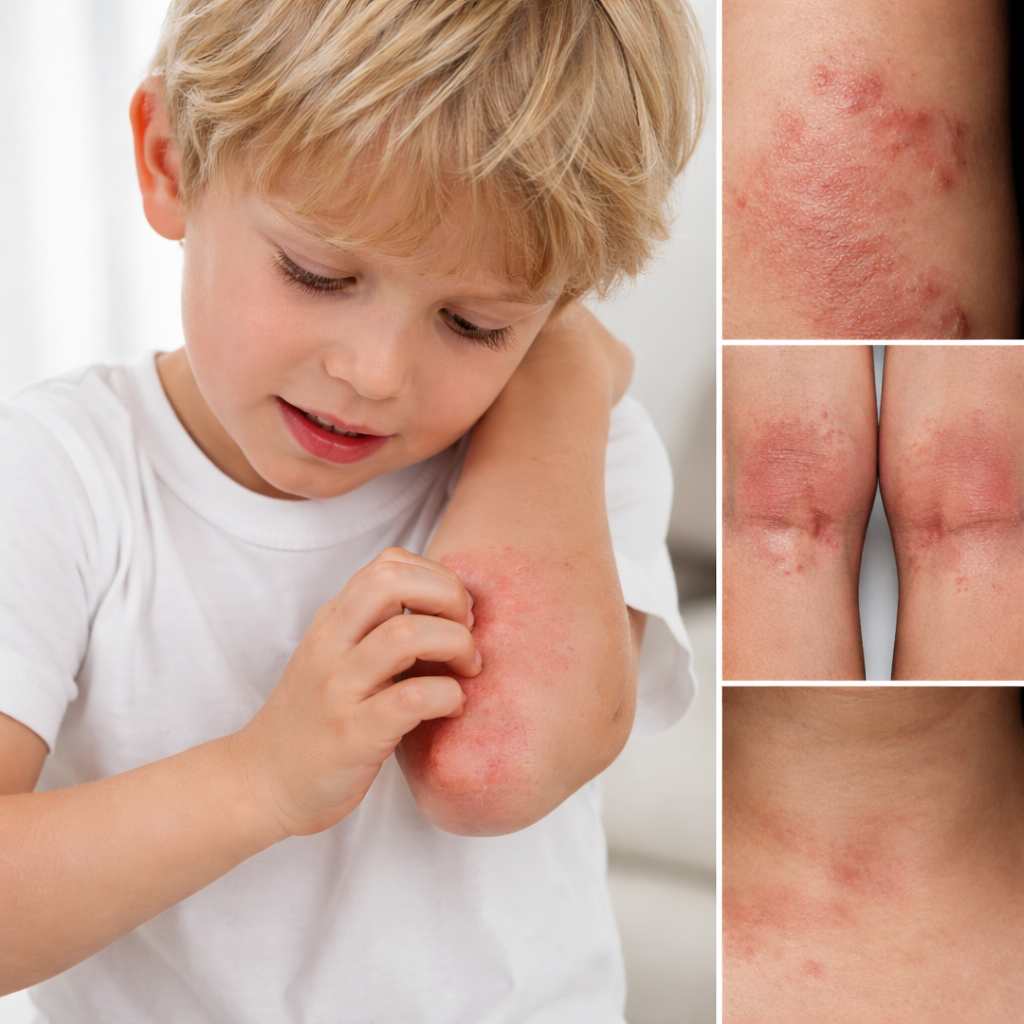
What it is
Eczema is a very common inflammatory skin condition in children and often runs alongside allergies, asthma, or hay fever.
Common symptoms
- Dry skin
- Itchy red patches
- Sleep disturbance from itching
- Thickened skin in chronic cases
- Flare-ups with heat, sweat, soaps, or allergens
How it is diagnosed
Diagnosis is usually clinical. The doctor assesses the pattern, severity, and possible triggers.
Treatment
- Regular moisturising
- Prescription anti-inflammatory creams during flares
- Avoiding irritants
- Managing scratching and skin infection risk
- Allergy evaluation in selected children
When to worry
If the skin becomes painful, crusted, oozing, or suddenly worsens, secondary infection may need treatment.
10. Urinary Tract Infection (UTI)
What it is
UTIs can occur in babies and children and are sometimes missed because the symptoms can be vague, especially in younger children.
Common symptoms
- Fever without an obvious cause
- Pain or burning while passing urine
- Frequent urination
- Smelly urine
- Tummy pain
- Vomiting
- Irritability in infants
How it is diagnosed
A urine sample is tested for infection. In younger children, collecting a clean sample properly is important for accurate results.
Treatment
- Antibiotics, if confirmed or strongly suspected
- Good hydration
- Follow-up in recurrent cases
- Further imaging in selected children with repeated UTIs
When to worry
A baby with fever and poor feeding, or a child with vomiting, lethargy, or back pain with suspected UTI, should be reviewed early.
How Paediatricians Diagnose Common Illnesses in Children
Parents often worry that every illness needs blood tests, but in many cases, the diagnosis starts with a careful history and examination. A strong pediatric illness diagnosis guide always begins with the basics:
- How long have the symptoms been present
- Whether the child is eating, drinking, and passing urine normally
- Fever pattern and severity
- Breathing pattern
- Rash, swelling, or pain
- Any history of allergies, asthma, or repeated infections
- Vaccination status
- Recent sick contacts or school exposure
Sometimes, the most important part is not the test it is recognising the pattern.
Red Flags Parents Should Never Ignore
No matter what the diagnosis seems to be, seek urgent medical care if your child has:
- Difficulty breathing
- Persistent high fever
- Seizure or unusual drowsiness
- Refusing all fluids
- Signs of dehydration
- Blue lips or severe lethargy
- A rapidly spreading rash
- Severe pain
- Repeated vomiting
- A child who “just does not seem right”
These can be more important than the label of the illness itself.
When Common Symptoms Are Not Always “Just Viral”
Many parents look online for common symptoms of sickness in kids, but the same symptom can mean very different things depending on the child.
For example:
- A recurrent cough may be asthma, not just repeated colds
- A rash after food may need an allergy evaluation
- Ongoing tummy pain may need further work-up
- A recurrent blocked nose may be allergic rhinitis, not an infection
- Repeated ear or chest infections may need a broader pediatric review
This is especially relevant for children with eczema, wheeze, food reactions, or recurrent respiratory symptoms.
Final Thoughts
Most childhood illnesses can be managed well when parents know what to watch for. The key is not guessing, but recognising patterns, understanding warning signs, and seeking the right medical advice early. If your child has recurrent infections, unexplained rashes, wheezing, feeding-related reactions, or symptoms that keep coming back, a proper pediatric assessment can make a real difference.
If you are concerned about your child’s symptoms or need expert guidance for diagnosis, treatment, or allergy-related concerns, book a consultation with Dr Mahesh Katre. Early evaluation can lead to faster relief, fewer complications, and greater peace of mind for parents. To schedule an appointment, call or WhatsApp +971 55 232 9107.