


Many parents notice their child gaining weight faster than expected and start asking the same questions: is it food, screen time, lack of activity, or could something medical be causing it? This often leads to confusion, worry, and sometimes even guilt.
The truth is, childhood weight gain is not always as simple as “eat less and move more.” While lifestyle habits are often a major factor, some children may also have underlying medical or hormonal issues that need proper evaluation. Understanding the root cause is important for choosing the right approach to childhood obesity treatment and helping children achieve better long-term health. In this blog, we’ll explain the difference, the warning signs to watch for, and when it’s time to seek medical advice.
Why Childhood Weight Gain Needs a Thoughtful Approach
Children grow at different rates, and some body changes during growth are completely normal. A child may look fuller before a height spurt, appetite may increase during active growth phases, and body composition changes with age.
But when weight gain becomes rapid, persistent, or begins affecting a child’s stamina, sleep, mood, confidence, or health, it deserves attention.
Excess weight in children is not just about appearance. It can affect:
- Energy levels and physical activity
- Sleep quality
- Breathing and snoring
- Joint strain
- Emotional wellbeing
- Self-esteem and social confidence
- Risk of insulin resistance and metabolic issues
- Blood pressure and long-term heart health
That is why early identification matters. The earlier parents understand why weight gain is happening, the easier it is to support healthier change.
Are Most Cases of Childhood Obesity Hormonal?
This is one of the most common concerns parents bring to the clinic.
The short answer is: most children with excess weight do not have a hormone disorder.
In the majority of cases, weight gain is linked to a combination of:
- High-calorie processed foods
- Frequent snacking or sugary drinks
- Reduced outdoor play
- Long screen time
- Irregular sleep
- Emotional eating
- Family lifestyle patterns
- Lack of structured meal habits
However, there are some situations where doctors do need to consider medical causes, including hormonal imbalance and obesity in children.
The key is not to guess. The key is to look at the full picture.
Common Lifestyle-Related Causes of Weight Gain in Children
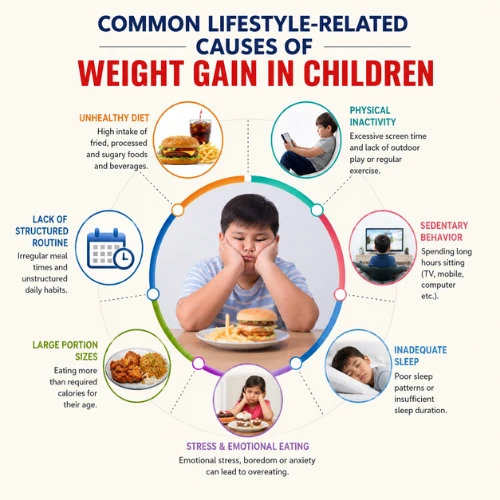
When parents ask about the causes of childhood obesity, it helps to remember that weight gain usually develops gradually from daily habits, not one single reason.
1. High-Calorie, Low-Nutrition Foods
Children today are surrounded by easy, attractive, ultra-processed foods. Chips, biscuits, sweetened cereals, packaged juices, milkshakes, fast food, and “treat” snacks can quickly add up.
Even foods marketed as “healthy” may contain hidden sugar or excess calories.
2. Large Portion Sizes
Many children are encouraged to “finish the plate,” even when they are already full. Over time, this can interfere with natural hunger and fullness cues.
3. Frequent Snacking
Constant grazing throughout the day, especially on processed foods, can lead to excess calorie intake without children or parents fully realising it.
4. Sugary Drinks
Juices, flavoured milk, soft drinks, sports drinks, and sweetened beverages can significantly increase calorie intake while offering little satiety.
5. Lack of Physical Activity
Modern childhood often involves less outdoor play and more sitting. School hours, homework, tuition, and screen time all reduce natural movement.
6. Poor Sleep
This is often underestimated. Children who do not sleep well may become more tired, less active, and more likely to crave energy-dense foods.
7. Emotional and Behavioural Factors
Stress, boredom, reward-based eating, and family food patterns can all influence weight gain in ways that are not always obvious.
When Should Parents Think About Hormonal Causes?
Hormonal causes of obesity in children are much less common, but they do exist.
A hormonal problem is more likely to be considered when weight gain is accompanied by other unusual signs, especially if the child’s height growth is also slowing down.
This is an important clue.
A child with lifestyle-related obesity often continues to grow taller normally or even faster than expected for age. But a child with a real hormonal issue may gain weight and show reduced height growth.
Possible warning signs that may need medical review include:
- Weight gain with poor or slowed height gain
- Unusual fatigue
- Constipation
- Dry skin
- Feeling cold more than usual
- Delayed puberty or abnormal puberty changes
- Excessive sleepiness
- Severe growth delay
- Rounder face or changes in body fat distribution
- Headaches or vision changes in rare cases
- Rapid weight gain after starting certain medications
These signs do not automatically mean a hormonal problem is present, but they are reasons not to dismiss the issue.
Which Hormonal Conditions Can Affect Weight?
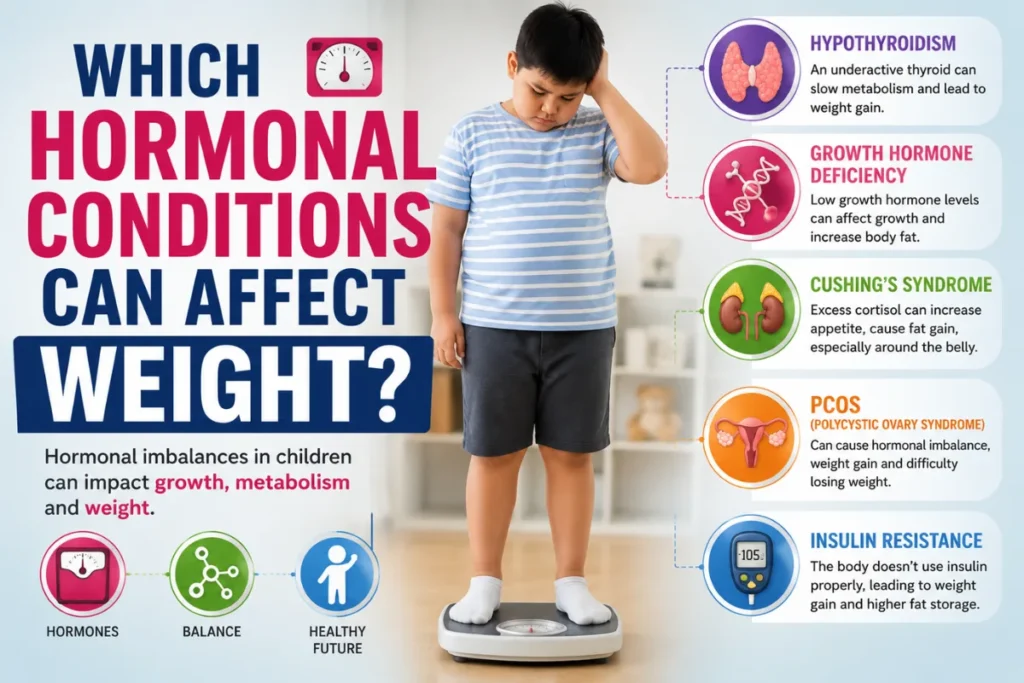
A few medical conditions can contribute to excess weight in children, although they are far less common than lifestyle-related causes.
1. Hypothyroidism
An underactive thyroid can slow metabolism and may cause:
- Fatigue
- Constipation
- Dry skin
- Sluggishness
- Slower growth in height
It can contribute to weight gain, but it usually does not cause severe obesity on its own.
2. Cushing Syndrome
This is rare in children, but it may cause:
- Rapid weight gain
- Round face
- Thin arms and legs compared to the trunk
- Stretch marks
- Mood changes
- Growth slowing
3. Growth Hormone Deficiency or Other Endocrine Issues
Some endocrine conditions can affect body composition, growth, and weight patterns, often alongside short stature or poor growth.
4. Genetic and Syndromic Causes
In some children, obesity may be part of a broader genetic pattern, especially if it begins very early, is severe, or is associated with developmental or behavioural concerns.
This is why proper medical evaluation matters. Not every child needs hormonal testing, but some absolutely do.
Obesity in Kids: Hormones vs Lifestyle
When parents are trying to understand obesity in kids, hormones vs lifestyle, doctors usually look at a few key questions:
1. Is the child also growing taller normally?
Normal or increased height growth usually points more toward lifestyle causes.
2. When did the weight gain start?
Sudden or unusual changes deserve more attention than gradual patterns linked to diet and routine.
3. Are there other symptoms?
Fatigue, constipation, delayed puberty, poor school stamina, or growth slowing may suggest medical causes.
4. What do daily habits look like?
Meal timing, portion size, screen time, sleep, activity, and snack patterns often reveal the bigger picture.
5. Is there a family pattern?
Family history can influence body type, eating habits, metabolic risk, and lifestyle routines.
The most helpful approach is not “Is it hormones or lifestyle?” as if it must be only one. Sometimes lifestyle is the main driver, but poor sleep, stress, medications, or medical issues may also contribute.
What Parents Should Avoid Doing
When a child is gaining excess weight, families often try to “fix it” quickly. Unfortunately, some common approaches can do more harm than good.
Avoid:
- Strict crash diets
- Shaming or blaming the child
- Comparing siblings
- Using food as a reward or punishment
- Labelling foods as “good” or “bad” in extreme ways
- Forcing intense exercise suddenly
- Ignoring emotional wellbeing
- Assuming every overweight child needs blood tests
- Assuming every overweight child is “just overeating”
Children need support, not guilt.
What a Healthy Medical Evaluation Usually Includes
If a child is gaining weight significantly or parents are concerned, a proper assessment may include:
- Growth chart review
- Height and weight pattern over time
- Diet and activity history
- Sleep assessment
- Family history
- Puberty and development review
- Medication history
- Examination for signs of endocrine or metabolic issues
Depending on the findings, your doctor may decide whether blood tests are needed.
Not every child needs extensive testing. But every child deserves an individual assessment.
What Parents Can Do at Home Right Now
Even before labelling the cause, there are practical ways families can improve health without making the child feel targeted.
1. Focus on Family Habits, Not the Child Alone
Make changes as a household. If everyone improves eating and movement patterns, the child feels supported rather than singled out.
2. Build Meal Structure
Aim for:
- Regular meal timings
- Fewer random snacks
- Balanced meals with protein, fibre, and healthy fats
- Less sugary drinks
- More water
3. Reduce Ultra-Processed Foods Gradually
You do not need perfection. Start by reducing the most frequent calorie-heavy foods and replacing them with simple, realistic alternatives.
4. Improve Sleep
Good sleep is one of the most overlooked tools in weight management.
5. Encourage Movement That Feels Natural
Not every child needs “exercise” in the formal sense. Walking, cycling, swimming, dancing, outdoor play, and active family time all count.
6. Protect Self-Esteem
A child who feels ashamed often becomes less active, more withdrawn, and more emotionally dependent on food.
Childhood Obesity Reasons and Prevention
When thinking about childhood obesity reasons and prevention, the most useful message for parents is this:
Prevention starts early, but improvement can begin at any age.
Prevention and long-term support include:
- Creating regular meal routines
- Offering balanced home-cooked meals more often
- Limiting sugary drinks
- Keeping snacks planned rather than constantly
- Encouraging outdoor play daily
- Protecting sleep
- Reducing screen-based eating
- Avoiding food as emotional comfort
- Monitoring growth patterns during routine check-ups
- Seeking medical review when weight gain seems unusual
The goal is not a “perfect weight.”
The goal is a healthier child with better energy, confidence, sleep, movement, and long-term well-being.
Final Thoughts for Parents
If your child is gaining weight, don’t jump to conclusions. In many cases, it’s linked to food habits, activity, and routine, but some children may need proper medical evaluation, especially if weight gain comes with poor height growth, fatigue, or other concerning symptoms.
The best first step is assessment, not blame. Book a consultation with Dr Mahesh Katre for an expert pediatric evaluation. Call +971 55 232 9107.