

When a child has loose stools for a day or two, it is often just a stomach bug or something they ate. But if diarrhea keeps coming back or lasts for weeks, it may be more than a temporary digestive issue. Chronic diarrhea can affect appetite, weight gain, sleep, mood, and overall growth, and in some cases, food allergy may be one of the causes.
This is important because not every food allergy causes hives or breathing problems. Some children show allergy symptoms mainly through the gut, with ongoing loose stools, bloating, mucus in stools, poor feeding, or irritability. If routine treatments are not helping, it is worth asking whether food could be the trigger.
When Is Diarrhea Considered “Chronic”?
In simple terms, diarrhea is considered chronic when loose or watery stools continue for more than 2 to 4 weeks, or when they keep recurring frequently over time.
This is different from a short stomach infection, which usually improves in a few days.
Signs that suggest the problem needs a proper medical evaluation include:
- Loose stools lasting more than 2 weeks
- Frequent stools every day for a prolonged period
- Mucus or blood in stools
- Weight loss or poor weight gain
- Poor appetite
- Abdominal pain or bloating
- Vomiting along with diarrhea
- Irritability or disturbed sleep
- Fatigue or low energy
- Signs of dehydration
- Symptoms linked to certain foods
When diarrhea keeps happening, it is not just about the stools. It can start affecting a child’s nutrition, gut health, immunity, and growth.
Can Food Allergy Really Cause Chronic Diarrhea?
Yes, in some children, it absolutely can.
A pattern of chronic diarrhea linked to food allergies is something pediatric allergy specialists look for, especially when symptoms repeatedly occur after eating certain foods or when the child has a history of eczema, reflux, poor feeding, or other allergic conditions.
Food allergy-related diarrhea happens because the immune system reacts abnormally to proteins in food. This reaction may cause inflammation in the gut lining, which can lead to:
- Loose stools
- Frequent stools
- Mucus in stools
- Stomach cramps
- Vomiting
- Feeding refusal
- Blood in stools in some cases
- Poor absorption of nutrients
Importantly, not all food allergies are immediate or dramatic. Some are delayed-type reactions, which means the symptoms may appear hours later or develop as an ongoing gut issue rather than a sudden emergency.
Common Food Triggers That May Cause Gut Symptoms

Certain foods are more commonly linked with gastrointestinal allergy symptoms in children, especially in infants and young children.
Possible triggers include:
- Cow’s milk protein
- Soy
- Egg
- Wheat
- Peanut
- Tree nuts
- Fish or shellfish (less commonly in younger children, depending on diet)
- Certain mixed packaged foods contain hidden allergens
In babies and toddlers, cow’s milk protein allergy is one of the most common causes of persistent digestive symptoms.
That said, not every child with diarrhea after milk has a true allergy. Some may have lactose intolerance, a temporary post-infection sensitivity, or another gut issue. That is why correct diagnosis matters.
What Does Food Allergy Diarrhea Usually Look Like?
The challenge is that food allergy-related diarrhea does not always look “classic.”
Some children may have:
- Loose stools multiple times a day
- Diarrhea that worsens after specific meals
- Mucus in stools
- Smelly or frothy stools
- Discomfort while passing stools
- Bloating after feeding
- Vomiting or reflux
- Fussiness after eating
- Poor feeding
- Slow weight gain
In some cases, food allergy symptoms, such as diarrhea, may appear alongside other clues such as:
- Eczema
- Frequent skin rashes
- Nasal allergy symptoms
- Wheezing
- Family history of allergy, asthma, or eczema
- Recurrent colic-like discomfort in infants
This combination often gives an important clue that the gut issue may not be purely infectious or functional.
Not All Chronic Diarrhea Is Food Allergy
This is a very important point for parents.
Food allergy is one possible cause, but it is not the only cause of chronic loose stools.
Other causes of persistent diarrhea in kids can include:
- Recurrent or lingering gut infections
- Post-infectious gut sensitivity
- Lactose intolerance
- Celiac disease
- Toddler’s diarrhea
- Irritable bowel patterns
- Inflammatory bowel disease (less common but important)
- Malabsorption syndromes
- Pancreatic enzyme issues
- Parasitic infections
- Antibiotic-related diarrhea
- Overconsumption of fruit juices or sorbitol-containing drinks
That is why parents should avoid removing multiple foods on their own without proper guidance. Unnecessary food restriction can create nutritional deficiencies, especially in growing children.
Types of Food Allergy That Can Cause Chronic Diarrhea
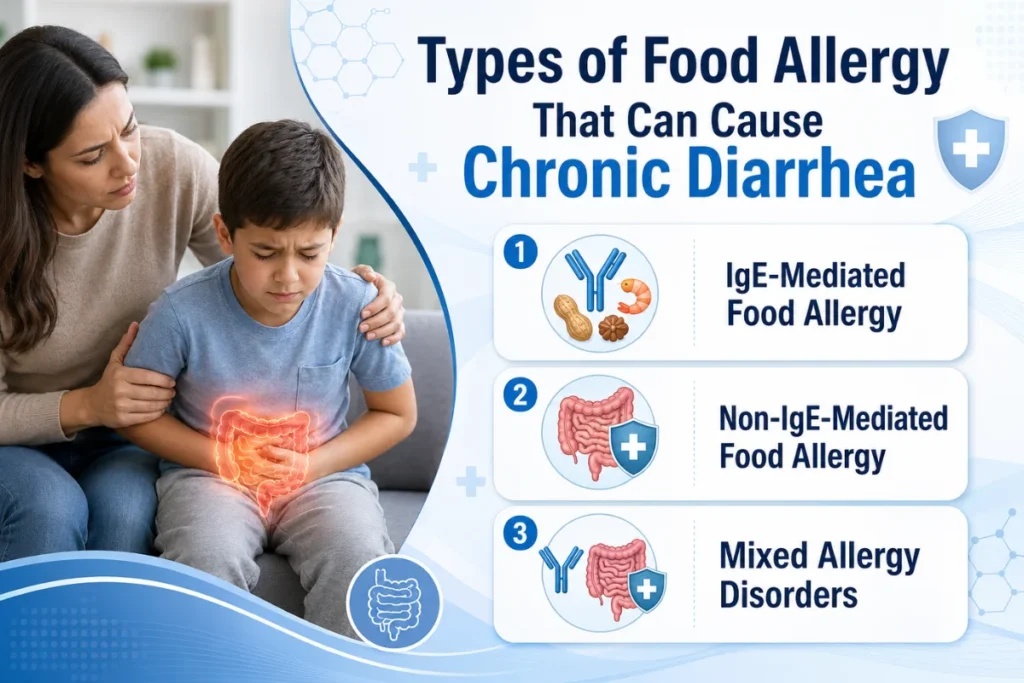
There are different ways food allergies can affect the gut.
1. IgE-Mediated Food Allergy
This is the type most parents recognise.
Symptoms may happen quickly after eating and can include:
- Hives
- Lip swelling
- Vomiting
- Wheezing
- Itching
- Sudden diarrhea
This type is easier to identify because the reaction is usually more obvious and immediate.
2. Non-IgE-Mediated Food Allergy
This is the type that often gets missed.
Symptoms are usually delayed and mainly involve the digestive system.
A child may develop:
- Ongoing diarrhea
- Mucus in stools
- Blood-streaked stools
- Vomiting
- Reflux
- Poor feeding
- Irritability
- Slow weight gain
This form of allergy is common in infants and younger children and may not show up clearly on standard skin prick tests or blood allergy tests. Diagnosis often depends on clinical history, examination, and a carefully supervised elimination-and-reintroduction plan.
3. Mixed Allergy Disorders
Some children have both immediate and delayed symptoms, which makes the picture more confusing.
For example, a child may have eczema, reflux, loose stools, and flare-ups after certain foods, but no dramatic swelling or hives. These cases need a more specialist-led approach.
When Should Parents Suspect a Food Allergy?
Parents should consider asking about food allergies if:
- Diarrhea keeps coming back after the same food
- Symptoms started after introducing formula or solids
- The child has eczema plus gut symptoms
- There is blood or mucus in the stools
- The child is not gaining weight properly
- Diarrhea is associated with vomiting or feeding refusal
- There is a family history of allergy or asthma
- The child improves when a certain food is removed, then worsens again when it returns
These patterns do not confirm an allergy on their own, but they are strong clues that should not be ignored.
How Is Food Allergy Diagnosed in a Child With Chronic Diarrhea?
This is where specialist evaluation becomes very important.
A proper assessment usually includes:
1. Detailed Clinical History

This is often the most valuable part.
Your pediatric allergy specialist may ask:
- When did the diarrhea start?
- How long has it been going on?
- Is it every day or on and off?
- What foods seem to trigger it?
- Are there associated symptoms like vomiting, rash, eczema, wheeze, or bloating?
- Was there a recent infection before symptoms started?
- Is the child gaining weight normally?
- Any family history of allergy?
Often, the timeline tells the story better than any test.
2. Growth and Physical Examination
A child with chronic diarrhea needs a proper assessment of:
- Weight
- Height
- Hydration
- Nutritional status
- Signs of anemia
- Signs of eczema or allergic disease
- Abdominal examination
This helps identify whether the issue is affecting overall development.
3. Stool and Blood Tests (When Needed)
Depending on the child’s symptoms, the doctor may recommend:
- Stool examination for infection or parasites
- Stool for blood or inflammation markers
- Blood counts
- Iron levels
- Celiac screening
- Inflammatory markers
- Other gut-related investigations if needed
These tests help rule out other important causes.
4. Allergy Testing
If an immediate-type food allergy is suspected, tests may include:
- Skin prick testing
- Specific IgE blood testing
However, parents should know this clearly:
A normal allergy test does not always rule out non-IgE food allergy.
That is why food allergy diagnosis is not based only on lab results.
5. Elimination and Reintroduction Plan
In many suspected cases, the most useful next step is a carefully supervised elimination trial.
This means:
- Removing the suspected trigger food for a specific period
- Monitoring stool pattern, feeding, comfort, and growth
- Reintroducing the food under medical guidance if appropriate
- Observing whether symptoms return
This process must be done properly. Random food removal at home without supervision can create confusion and nutritional imbalance.
Is It Always Dangerous?
Not always. But it should never be ignored.
Some children may have mild but persistent symptoms that slowly affect:
- Growth
- Appetite
- Iron levels
- Sleep
- Mood
- Gut comfort
- Nutritional intake
In other cases, the diarrhea may be part of a more significant allergic gut disorder that needs structured treatment.
The sooner the correct cause is identified, the easier it is to manage and the less likely the child is to develop long-term feeding struggles or unnecessary food restrictions.
How Is Food Allergy-Related Chronic Diarrhea Treated?
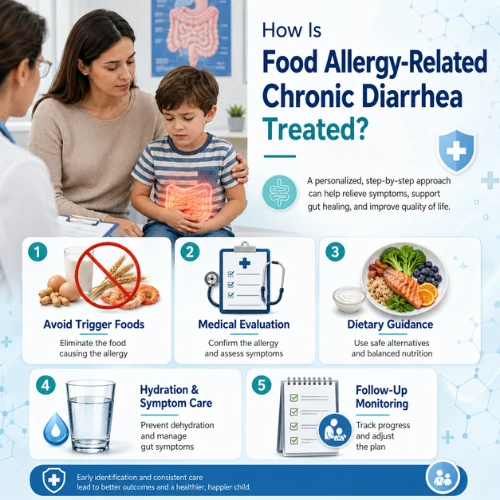
Treatment depends on the cause.
If the diagnosis suggests diarrhea due to food allergy in children, management usually involves:
1. Identifying the Exact Trigger
The goal is not to remove “many foods.”
The goal is to identify the specific problem food and avoid only what is necessary.
2. Safe Elimination With Nutritional Planning
If milk, soy, egg, or another major food group needs to be removed, the child may need:
- Nutritional substitutes
- Formula adjustments (in infants)
- Calcium or protein planning
- Dietitian support in selected cases
This is especially important in younger children.
3. Monitoring Symptoms and Growth
Once the trigger is removed, the doctor will track:
- Stool improvement
- Feeding comfort
- Weight gain
- Skin symptoms
- Overall wellbeing
This confirms whether the treatment is truly helping.
4. Reassessment Over Time
Many childhood food allergies improve with age.
That means the child may later need:
- Repeat evaluation
- Allergy retesting when appropriate
- Supervised food challenge in selected cases
The aim is not lifelong avoidance unless truly necessary.
What Parents Should Avoid Doing
If your child has chronic diarrhea, try not to:
- Remove multiple foods without medical advice
- Assume every loose stool is a food allergy
- Keep changing the formula repeatedly without guidance
- Depend only on the internet food sensitivity lists
- Delay evaluation if the child is losing weight or has blood in the stools
- Ignore associated eczema, vomiting, or feeding issues
The biggest risk is either missing a true allergy or unnecessarily restricting the child’s diet when the cause is something else.
Final Thoughts
Chronic diarrhea in a child should never be ignored, especially if it keeps coming back or starts affecting growth, appetite, or comfort. While infections are common, food allergy can sometimes be an overlooked cause, especially when symptoms mainly affect the gut.
If your child has ongoing loose stools, mucus in stools, feeding issues, eczema, or symptoms linked to certain foods, book a consultation with Dr Mahesh Katre for a proper pediatric allergy evaluation. Call +971 55 232 9107