

Eczema is common in children, especially during the early years of life. Dry, itchy, inflamed skin can come and go, sometimes improving with treatment and then flaring again without an obvious reason. Because allergies are often associated with eczema, parents may naturally wonder whether a food or environmental allergy is causing their child’s skin problems.
This raises an important question: When should a child with eczema have allergy testing?
The answer is not every child with eczema needs an allergy test. Although children with atopic dermatitis have a higher likelihood of developing food allergies than children without eczema, routine testing for every child can sometimes create confusion, unnecessary food restrictions, and anxiety.
Allergy testing for eczema should be guided by the child’s symptoms, medical history, age, eczema severity, and any specific reaction to a suspected allergen.
For families in Dubai and across the UAE, working with an experienced paediatric allergy specialist can help determine whether testing is appropriate and how the results should be interpreted.
Is Eczema Caused by Allergies?
Usually, eczema is not simply caused by an allergy.
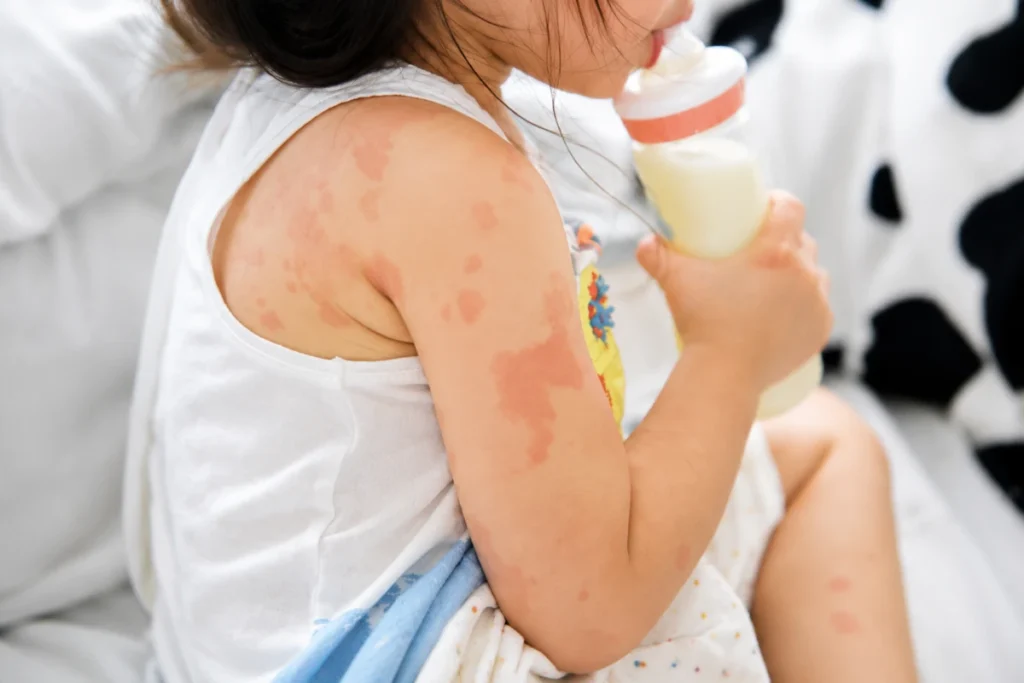
Atopic dermatitis is a complex inflammatory skin condition involving the skin barrier, immune system, genetics, and environmental factors. Children with eczema can have very sensitive skin that reacts to irritants such as soaps, fragrances, sweat, heat, dry air, and certain fabrics.
However, some children with eczema also have food allergies or other allergic conditions.
This is why the relationship between eczema and allergy can be confusing.
A child may have both conditions without the food allergy being responsible for the eczema itself.
What Is the Link Between Eczema and Food Allergy?
The connection between eczema and food allergy is strongest in children with moderate to severe atopic dermatitis, particularly during infancy.
Children with significant eczema may have an increased risk of developing food allergies. Common food allergens in children include:
- Cow’s milk
- Egg
- Peanut
- Tree nuts
- Wheat
- Soy
- Sesame
- Fish and shellfish
However, finding sensitisation to a food on an allergy test does not necessarily mean the child has a clinical food allergy.
This distinction is extremely important.
A child may have a positive skin-prick or blood test but still be able to eat that food without experiencing an allergic reaction. Testing therefore needs to be interpreted alongside the child’s actual history.
When to Test Eczema for Allergies
So, when to test eczema for allergies?
Testing may be considered when there is a clear reason to suspect an allergy rather than simply because a child has eczema.
An allergy evaluation may be appropriate when:
1. A Specific Food Causes an Immediate Reaction
If your child’s eczema or other symptoms consistently worsen shortly after eating a particular food, an allergy specialist may investigate further.
More concerning immediate symptoms can include:
- Hives
- Swelling of the lips, face, or eyes
- Vomiting
- Coughing
- Wheezing
- Difficulty breathing
- Sudden worsening of symptoms
A reaction involving breathing difficulties, throat swelling, fainting, or multiple body systems can indicate anaphylaxis and requires emergency medical attention.
2. Eczema Is Moderate to Severe and Difficult to Control
Children with persistent moderate-to-severe eczema that does not improve adequately despite appropriate skincare and medical treatment may benefit from an allergy assessment in selected circumstances.
This does not mean that food is necessarily causing the eczema. Instead, the specialist can determine whether there are other allergic factors worth investigating.
3. There Is a Strong History of Food Reactions
If a child has previously developed symptoms after eating a specific food, this is more useful than performing broad testing without a clear clinical history.
The doctor may recommend targeted testing based on the suspected allergen.
4. There Are Symptoms Beyond the Skin
Eczema accompanied by other symptoms may raise greater suspicion of an allergic condition.
For example, a child who develops eczema along with recurrent hives, vomiting, wheezing, or immediate swelling after eating certain foods may require further evaluation.
5. There Is a Known Food Allergy in the Family
A family history of allergic disease can be relevant when assessing a child’s overall risk.
However, having a parent or sibling with a food allergy does not automatically mean the child needs allergy testing.
The decision should still be based on the child’s own medical history.
What About Eczema Allergy Testing in Children?
Eczema allergy testing in children may involve several different approaches.
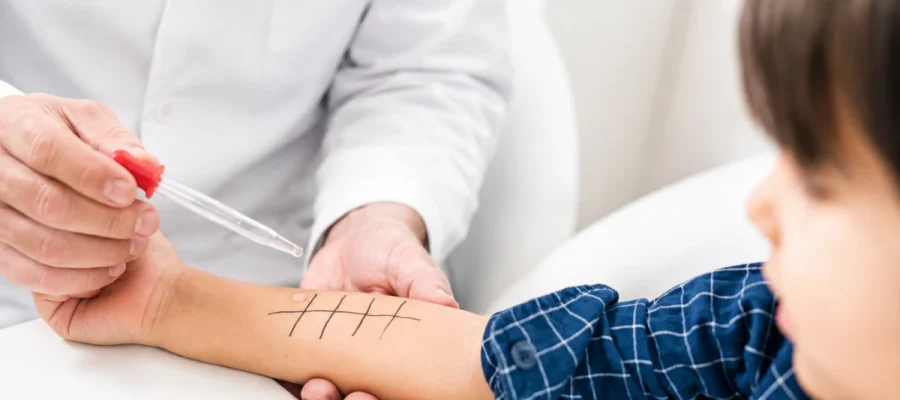
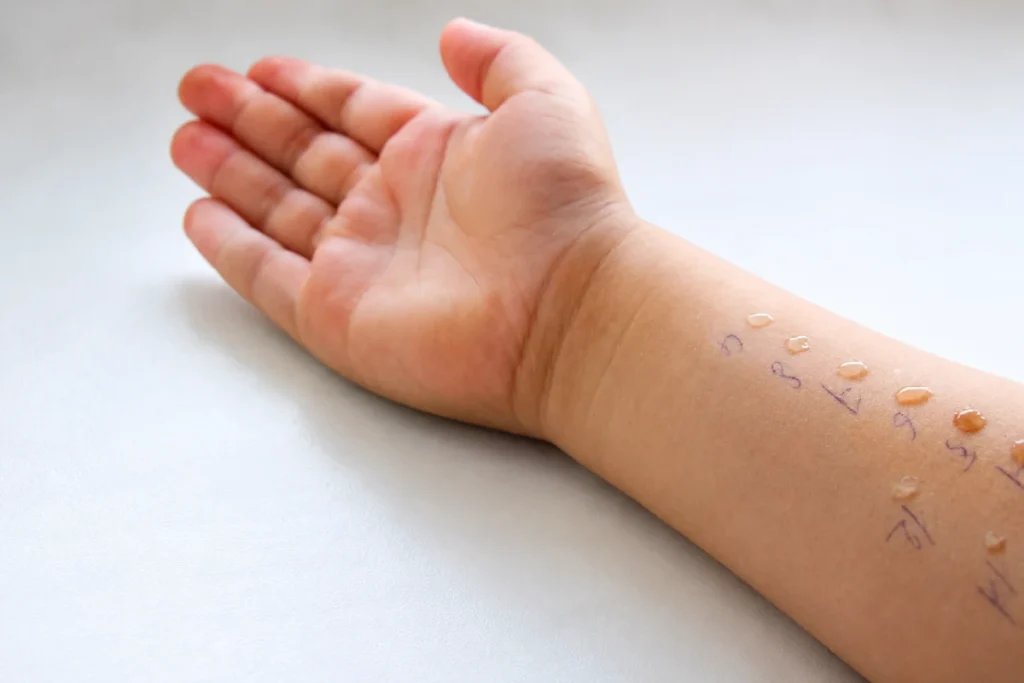
Depending on the suspected allergy, an allergy specialist may recommend a skin-prick test or a blood test that measures allergen-specific IgE antibodies.
Neither test should be interpreted in isolation.
A positive result usually indicates sensitisation, meaning the immune system recognises the allergen. It does not automatically confirm that eating or being exposed to the allergen will cause symptoms.
This is why the child’s history is often the most important part of the assessment.
In selected cases, a doctor may recommend a medically supervised oral food challenge. This involves giving carefully measured amounts of a suspected food under medical supervision to determine whether the child actually reacts.
Why Routine Food Allergy Testing Is Not Recommended for Every Child With Eczema
Parents sometimes request broad allergy panels hoping to identify every possible food trigger.
It sounds logical, but extensive testing can sometimes do more harm than good.
A large panel may identify foods that produce positive test results even though the child can safely eat them. This can lead parents to unnecessarily remove several foods from the child’s diet.
For growing children, unnecessary elimination diets can create nutritional concerns and make everyday meals significantly more complicated.
It may also create anxiety around food.
For this reason, food allergy testing for children with eczema should generally be targeted toward foods that are clinically suspected rather than based on broad screening.
Eczema and Food Allergy Testing: What Parents Should Know
One of the biggest misconceptions is that identifying a food allergy will automatically cure eczema.
This is not necessarily the case.
Even when a child has a confirmed food allergy, eczema can continue because it has multiple contributing factors.
If a child has a confirmed food allergy, avoiding the allergen may prevent allergic reactions, but eczema still needs appropriate skin care and medical management.
A good allergy assessment should therefore consider the whole picture rather than focusing only on food.
What Other Allergy Triggers Can Affect Eczema?
Food is not the only possible allergic or environmental trigger.
Some children may experience symptoms associated with airborne allergens such as dust mites, pollen, mould, or animal dander.
However, these triggers should not automatically be blamed for every eczema flare.
Common non-allergic triggers can include:
- Heat and sweating
- Dry weather
- Fragranced products
- Harsh soaps
- Certain detergents
- Rough fabrics
- Skin infections
- Stress
- Changes in temperature
Dubai’s hot climate, frequent air-conditioning, dust exposure, and dry indoor environments can be relevant for children with sensitive skin.
Parents may find it useful to keep track of when eczema flares occur and what the child was exposed to around that time.
How Should Parents Prepare for an Allergy Consultation?
Before visiting an allergy specialist, keep a record of your child’s symptoms.
Useful information includes:
- What the child ate before a suspected reaction
- How quickly symptoms appeared
- What symptoms occurred
- How long they lasted
- Whether the food had been eaten previously without a reaction
- Any medication given
- Whether eczema treatment was being used consistently
- Photos of significant skin reactions, if available
This information can help the specialist decide whether testing is necessary and which allergens should be investigated.
Should You Remove Foods Before Testing?
Parents should generally avoid eliminating major foods from a child’s diet simply because they suspect an allergy.
Removing foods before speaking with a specialist can make the clinical history harder to interpret and may create unnecessary nutritional restrictions.
If a child has experienced a clear reaction to a particular food, speak with a healthcare professional about what to do next rather than repeatedly exposing the child to the suspected allergen at home.
When Is Allergy Testing Not Necessary?
A child with mild eczema that responds well to appropriate skincare does not automatically need allergy testing.
If there is no history of food-related reactions, no symptoms suggesting an immediate allergy, and eczema is well controlled, routine allergy screening may provide little benefit.
The focus should instead remain on maintaining the skin barrier, identifying irritants, and following the child’s eczema treatment plan.
The Bottom Line
Allergy testing for atopic dermatitis should be individualised.
Eczema and food allergy can occur together, particularly in children with moderate-to-severe eczema, but eczema does not automatically mean a child has a food allergy.
Testing is most useful when there is a specific reason to suspect an allergy, such as an immediate reaction after eating a particular food, difficult-to-control moderate-to-severe eczema, or other symptoms consistent with an allergic reaction.
For parents in Dubai, a paediatric allergy specialist can help determine whether testing is appropriate and avoid unnecessary elimination diets or confusing test results.
The goal is not to test for every possible allergen. It is to identify clinically meaningful allergies while ensuring your child continues to receive the nutrition and treatment they need.
Frequently Asked Questions
1. Does every child with eczema need allergy testing?
No. Routine allergy testing is not recommended for every child with eczema. Testing is generally considered when the child’s history suggests a possible food or environmental allergy, particularly when there are immediate reactions or difficult-to-control moderate-to-severe eczema.
2. When should a child with eczema be tested for food allergies?
Eczema and food allergy testing may be considered when a child develops symptoms such as hives, swelling, vomiting, wheezing, or other immediate reactions after eating a specific food. A specialist may also consider testing in selected children with moderate-to-severe eczema that remains difficult to control.
3. Can food allergies cause eczema?
Food allergies can be associated with eczema, but they are not the cause of eczema in every child. Even when a child has a confirmed food allergy, eczema may continue because several factors contribute to atopic dermatitis.
4. What allergy tests are used for children with eczema?
Depending on the child’s history, an allergist may recommend skin-prick testing or blood tests for allergen-specific IgE. In selected cases, a medically supervised oral food challenge may be used to determine whether a child actually reacts to a suspected food.
5. Can a child have a positive allergy test but still eat the food safely?
Yes. A positive allergy test can indicate sensitisation but does not always mean the child has a clinical allergy. Test results should be interpreted together with the child’s symptoms and medical history by an allergy specialist.
6. Should I remove foods from my child’s diet because they have eczema?
Not without medical advice. Unnecessary food elimination can lead to nutritional deficiencies and may make feeding more difficult. If you suspect a particular food is triggering symptoms, discuss it with a paediatric allergy specialist before making major dietary changes.