

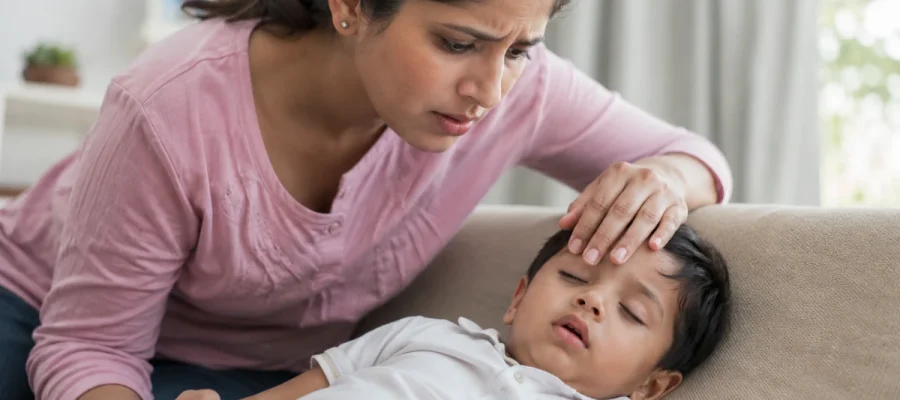
Seeing your child suddenly stiffen, shake, or lose awareness during a fever can be terrifying for any parent. In that moment, panic takes over. But while febrile seizures can look very alarming, they are actually more common than many parents realise, and in most cases, they are short, self-limited, and do not cause long-term brain damage.
Most febrile seizures happen in young children when the body temperature rises quickly, often during a viral infection. In this blog, we’ll explain what febrile seizures are, how to recognise them, what to do during the episode, what to avoid, and when your child should be properly evaluated by a doctor.
What Are Febrile Seizures?
A febrile seizure is a seizure that happens in a young child during a fever, usually between the ages of 6 months and 5 years. These seizures are triggered by the fever itself rather than by epilepsy or a long-term neurological condition.
They usually occur when the child’s temperature rises quickly, rather than because the fever is extremely high. That means a seizure can sometimes happen early in an illness, even before parents have noticed the fever.
Febrile seizures are generally divided into two types:
1. Simple Febrile Seizures
These are the most common types. They:
- Lasts less than 15 minutes
- Affects the whole body
- Happens only once in 24 hours
- Usually do not cause lasting problems
2. Complex Febrile Seizures
These are less common and may:
- Last longer than 15 minutes
- Affects only one side or one part of the body
- Happens more than once in 24 hours
- Need closer medical evaluation
Even though most febrile seizures are not dangerous, the first episode should always be assessed by a doctor to confirm the cause of the fever and rule out anything more serious.
Why Do Febrile Seizures Happen?
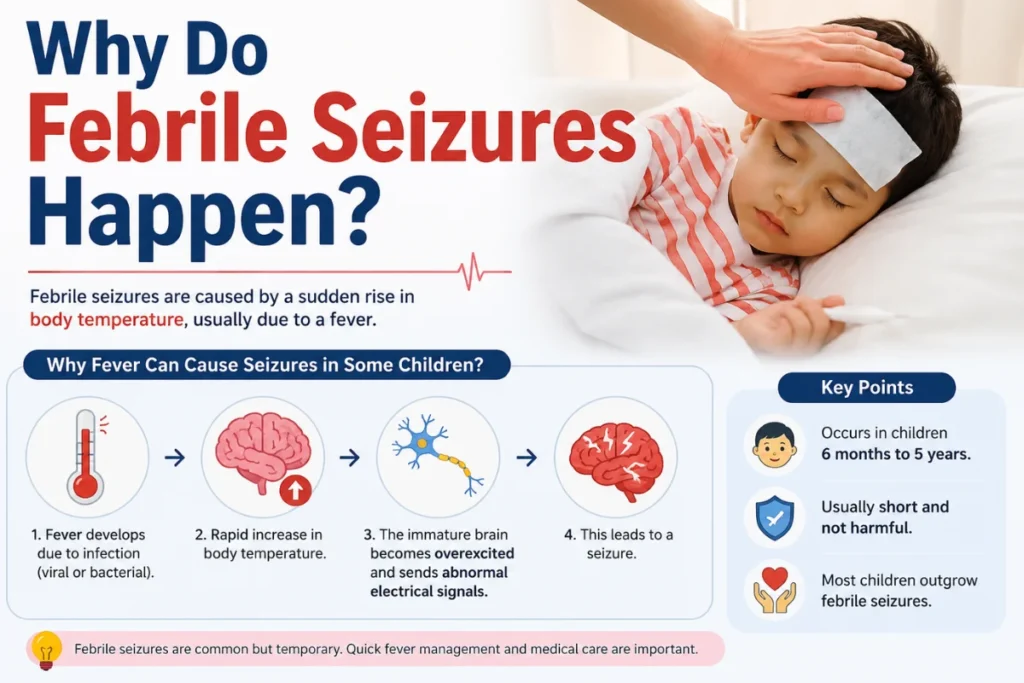
A child’s developing brain is more sensitive to sudden temperature changes. When a fever rises quickly, it can briefly trigger abnormal electrical activity in the brain, leading to a seizure.
Common triggers include:
- Viral infections
- Ear infections
- Throat infections
- Flu
- Roseola
- Respiratory infections
- Fever after certain vaccinations (rare and usually temporary)
It is important to remember that febrile seizures are linked to the fever response, not necessarily the severity of the illness.
Common Signs Parents May Notice
A febrile seizure can look dramatic and may last from a few seconds to a few minutes. Some parents describe it as their child “fainting,” but in reality, the child is having a seizure rather than a simple fainting spell.
Common symptoms of fever seizures in babies may include:
- Sudden loss of consciousness or unresponsiveness
- Body stiffness
- Jerking or rhythmic shaking of arms and legs
- Rolling back of the eyes
- Jaw clenching
- Breathing that appears irregular for a few seconds
- Temporary limpness after the shaking stops
- Sleepiness or confusion afterwards
After the episode, many children are tired, sleepy, or slightly irritable. This post-seizure drowsiness can be normal for a short time.
Is a Febrile Seizure the Same as Epilepsy?
No, not usually.
Most children who have febrile seizures do not go on to develop epilepsy. A febrile seizure is a fever-related event in a young child and is very different from recurrent seizures without fever.
That said, the risk may be slightly higher in certain situations, such as:
- A family history of epilepsy
- Complex febrile seizures
- Developmental or neurological concerns
- Repeated seizures without fever later on
This is why medical evaluation matters, especially after the first episode.
What Should You Do During a Febrile Seizure?
This is the most important part for parents. In the moment, staying calm is difficult, but your response can help keep your child safe.
If you are wondering what to do during a febrile seizure, follow these steps:
Step 1: Place Your Child on a Safe Surface
Lay your child on the floor, bed, or any flat, safe surface away from hard or sharp objects.
Step 2: Turn Them on Their Side
This helps keep the airway clear and reduces the risk of choking, especially if there is saliva or vomiting.
Step 3: Loosen Tight Clothing
Loosen clothing around the neck and chest to make breathing easier.
Step 4: Do Not Put Anything in the Mouth
Never put a spoon, finger, cloth, medicine, or water into your child’s mouth during a seizure.
Step 5: Time the Seizure
If possible, look at the clock or use your phone timer. What feels like a long time may actually be 1 to 2 minutes, but timing is very important for doctors.
Step 6: Watch the Pattern
Notice:
- How long does it last
- Whether the whole body is involved
- Whether one side moves more than the other
- Whether the child turns blue
- Whether the child is sleepy afterwards
These details help your doctor decide what kind of seizure it was.
Step 7: Seek Medical Attention
If it is the first seizure, or if the episode lasts more than a few minutes, your child should be medically assessed urgently.
This immediate response is the foundation of child first aid for febrile seizures and can help prevent injuries while you wait for the seizure to stop.
What NOT to Do During a Febrile Seizure
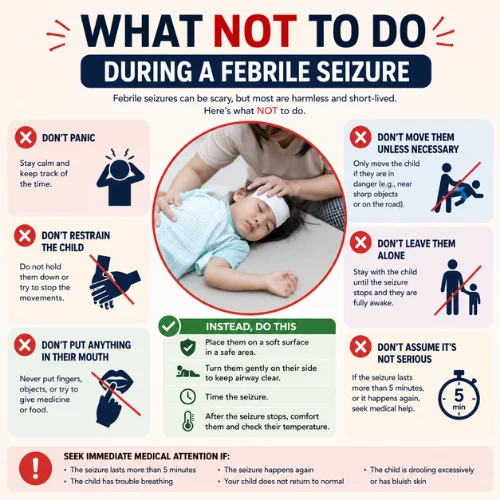
Many parents or bystanders try to “help” in ways that can actually be harmful.
Do not:
- Hold your child down forcefully
- Shake them
- Put anything in their mouth
- Try to give water, food, or medicine during the seizure
- Splash water on the face
- Try to lower the fever aggressively while the seizure is happening
Wait until the seizure ends before focusing on fever management.
When Should You Call Emergency Help Immediately?
Call emergency medical services right away if:
- The seizure lasts more than 5 minutes
- Your child has trouble breathing
- The lips or face turn blue and do not recover quickly
- The seizure affects only one side of the body
- Another seizure happens soon after
- Your child does not wake up or remains very difficult to arouse
- Your child is younger than 6 months
- There is a stiff neck, repeated vomiting, severe lethargy, or an unusual rash
- The seizure happens without a fever
- You are not sure whether it was truly a febrile seizure
These red flags may suggest something more serious and need urgent evaluation.
What Happens After the Seizure Stops?
Once the seizure ends:
- Keep your child on their side
- Check breathing
- Comfort them gently
- Let them rest
- Do not rush to feed or medicate immediately if they are still drowsy
- Seek medical review, especially if it is the first episode
Once your child is awake enough and safe to swallow, you can start fever management with age-appropriate medications advised by your doctor, such as paracetamol or ibuprofen (if suitable).
Remember, fever medicine can improve comfort, but it does not reliably prevent future febrile seizures.
How Doctors Diagnose Febrile Seizures
Diagnosis is mainly based on:
- Your child’s age
- The presence of fever
- What the seizure looked like
- How long did it last
- Whether there are any concerning neurological signs
- The cause of the fever
Your doctor may ask:
- Was this the first seizure?
- How high was the fever?
- Did the seizure happen before the fever was noticed?
- Was the whole body shaking?
- How long did it last?
- Was there a family history?
In many straightforward cases of simple febrile seizures, extensive brain scans or EEG tests are not needed. The focus is usually on finding the source of the fever and making sure there are no signs of meningitis, serious infection, or another neurological cause.
Treatment and Medical Management

Most simple febrile seizures stop on their own and do not require seizure-specific long-term medication.
The main focus of febrile convulsions treatment includes:
- Ensuring the child is stable after the episode
- Identifying and treating the cause of the fever
- Educating parents on seizure safety
- Monitoring for recurrence
- Deciding if further evaluation is needed in complex cases
In some children with prolonged or repeated seizures, doctors may prescribe rescue medication to be used at home if another episode lasts too long. This is usually considered only in specific cases and under specialist guidance.
Can Febrile Seizures Happen Again?
Yes, they can.
Around 1 in 3 children who have one febrile seizure may have another, especially if:
- The first seizure happened before 18 months of age
- There is a family history of febrile seizures
- The fever was not very high at the time of the seizure
- The seizure happened soon after the fever started
This does not automatically mean something serious is wrong. It simply means parents should be prepared and know the correct first-aid steps.
Can Febrile Seizures Be Prevented?
There is no guaranteed way to prevent them completely.
Because febrile seizures are often triggered by how quickly the temperature rises, even prompt fever treatment may not stop them from happening.
Still, helpful steps include:
- Treat fevers early for comfort
- Keep your child hydrated
- Watch for early signs of illness
- Have a clear action plan if your child has had one before
- Follow up with your paediatrician after any episode
The goal is not just prevention, but preparedness.
When Should You See a Pediatrician or Pediatric Allergy Specialist?
While febrile seizures are usually related to infections, every first seizure deserves a careful medical review. Parents often assume “it was just the fever,” but it is important to confirm the diagnosis and understand what triggered it.
You should seek specialist evaluation if:
- It was your child’s first seizure
- The seizure was prolonged
- The seizure pattern was unusual
- Your child has repeated febrile seizures
- There are concerns about development or behaviour afterwards
- Your child has a history of recurrent infections or unexplained fevers
- You are worried about whether it was really a febrile seizure or something else
A proper consultation can help you:
- Understand the cause of the fever
- Learn a personalised emergency action plan
- Know when to worry and when not to panic
- Avoid unnecessary fear in future fever episodes
A Quick Parent Action Plan to Remember
If your child has a febrile seizure:
- Stay as calm as possible
- Lay them on a safe surface
- Turn them onto their side
- Do not put anything in your mouth
- Do not restrain them
- Time the seizure
- Call emergency help if it lasts more than 5 minutes
- Get a medical assessment after the episode
Saving these simple steps can make all the difference in a real emergency.
Final Thoughts
Febrile seizures can look frightening, but in many cases, they are short and manageable. The key is knowing how to respond calmly and safely.
If your child has had a fever-related seizure, don’t ignore it. Book a consultation with Dr Mahesh Katre for a proper pediatric assessment and guidance. Call +971 55 232 9107.