
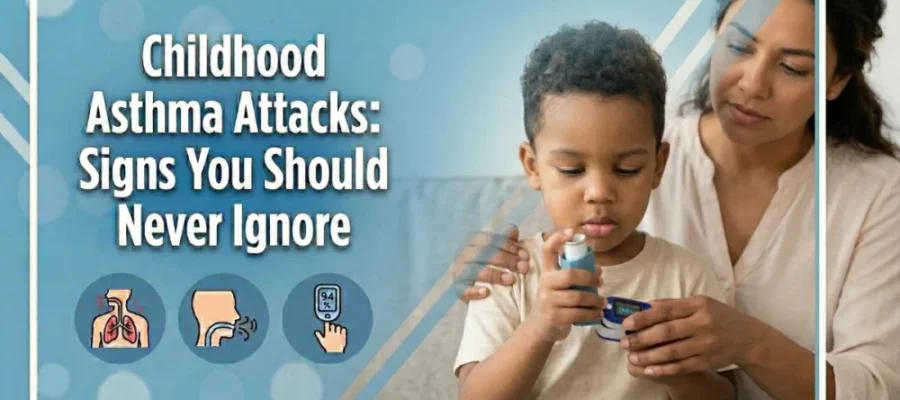
Childhood asthma signs can sometimes be subtle and mistaken for common coughs or respiratory infections. However, recognising the early warning signs of an asthma attack in children is essential to prevent symptoms from worsening. Persistent coughing, wheezing, shortness of breath, and breathing difficulties at night can indicate that a child needs medical attention.
A childhood asthma attack occurs when the airways become inflamed and narrow, making it harder for a child to breathe. Although asthma is a long-term condition, appropriate treatment and early intervention can help manage symptoms and reduce the risk of severe attacks. In this guide, learn the common signs of asthma in children, early warning symptoms, and emergency signs parents should never ignore.
What Is Asthma in Children
Asthma in children is a long-term condition that affects the airways in the lungs. The airways can become swollen and narrow, making it harder for a child to breathe. Common triggers, such as dust, pollen, cold air, or respiratory infections, can make these symptoms worse.
Asthma symptoms can vary from child to child. Some children have mild symptoms from time to time, while others may have frequent coughing, wheezing, or breathing difficulties that affect their sleep, school, and play. Recognising the early signs of asthma and an asthma attack in children can help parents take action early and seek medical care when needed.
Why Early Recognition of Asthma Attacks Matters
Asthma attacks rarely happen without warning. In most cases, the body gives signals hours or even days before a full-blown attack occurs.
Recognising early asthma attack symptoms allows parents to:
- Start reliever medication on time
- Remove or reduce triggers
- Seek medical help before breathing becomes severely compromised
Early action can prevent an asthma emergency and reduce the need for hospitalisation.
7 Common Signs and Symptoms of Childhood Asthma
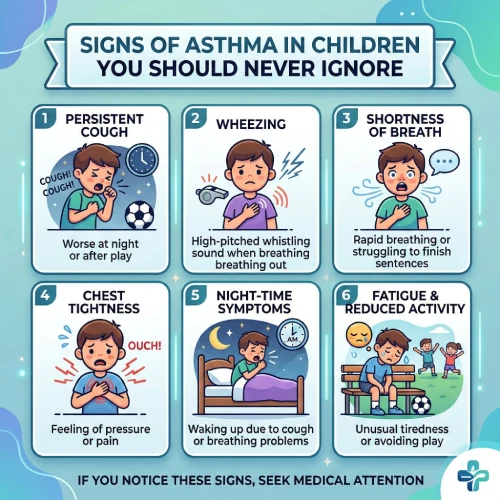
1. Persistent or Recurrent Cough
A cough that:
- Lasts for weeks
- Worsens at night
- Appears after exercise or laughter
can be one of the earliest signs of asthma in children. Many parents assume this is a lingering cold, but asthma-related cough often occurs without fever or other infection symptoms.
2. Wheezing or Whistling Sounds While Breathing
Wheezing is a high-pitched whistling sound, usually heard when a child breathes out.
Occasional wheezing during a cold may not always mean asthma, but repeated episodes or wheezing without infection should never be ignored. It often indicates airway narrowing that needs assessment.
3. Shortness of Breath or Rapid Breathing
Children may:
- Breathe faster than usual
- Struggle to complete sentences
- Stop playing earlier than other children
Young children may not describe breathlessness clearly, but signs such as flaring nostrils or visible effort while breathing are red flags.
4. Chest Tightness or Discomfort
Older children may describe a feeling of tightness, pressure, or pain in the chest. Younger children might clutch their chest or complain that it “hurts to breathe”.
Chest tightness is a classic symptom of airway constriction and should always be taken seriously.
5. Night-Time Symptoms
Asthma symptoms that worsen at night are particularly concerning.
Waking up due to:
- Coughing
- Wheezing
- Difficulty breathing
suggests poor asthma control and increases the risk of severe attacks.
6. Fatigue and Reduced Activity Levels
Children with poorly controlled asthma may appear unusually tired or avoid physical activity. They may sit out during sports or complain of feeling exhausted more quickly than their peers.
This is often overlooked but can signal ongoing breathing difficulty.
When Is an Asthma Attack in Children a Medical Emergency?
An asthma attack in children can become serious when breathing becomes very difficult. Parents should recognise the warning signs and seek emergency medical help without delay.
Seek emergency care immediately if your child:
- Has severe difficulty breathing or is gasping for air.
- Has blue or grey lips or fingernails.
- Cannot speak, cry, or drink properly because of breathing difficulties.
- Has the skin around the chest or neck pulling inward with each breath.
- Does not improve after using the prescribed reliever inhaler as directed in their asthma action plan.
These are serious signs of an asthma emergency in children. Do not wait for symptoms to get worse or try to manage severe breathing difficulties at home. Call your local emergency service immediately if your child is struggling to breathe.
Common Triggers of Asthma Attacks in Children
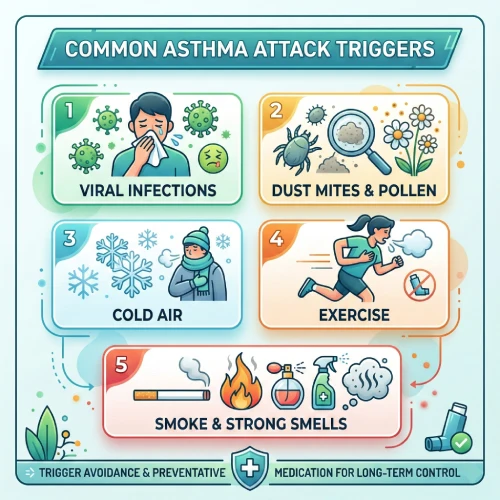
Asthma attacks in children can be triggered by certain things in their environment or daily activities. Knowing your child’s triggers can help you reduce exposure and manage asthma symptoms.
Common asthma triggers include:
- Viral infections: Colds and other respiratory infections.
- Dust mites and pollen: Common allergens that can worsen symptoms.
- Cold air: Cold weather may trigger coughing or breathing difficulties.
- Exercise: Physical activity can trigger symptoms in children whose asthma is not well controlled.
- Smoke and strong smells: Cigarette smoke, perfumes, and other strong odours may irritate the airways.
Avoiding known triggers and following your child’s prescribed asthma treatment can help reduce the risk of future attacks.
How to Manage Asthma and Prevent Attacks in Children
Proper asthma management can help control symptoms and reduce the risk of asthma attacks in children.
Here are some important steps parents can follow:
- Use inhalers correctly: Make sure your child uses their inhaler as prescribed.
- Follow prescribed treatment: Give preventive medication regularly as advised by your doctor.
- Avoid asthma triggers: Reduce exposure to dust, smoke, pollen, and other known triggers.
- Watch for symptoms: Look for changes in coughing, wheezing, or breathing. Monitor peak flow if your doctor recommends it.
A personalised asthma action plan helps parents know what to do when symptoms get worse and when to seek medical help.
The Role of Parents in Managing Childhood Asthma
Parents and caregivers play an important role in managing childhood asthma. Watching for changes in symptoms can help parents recognise when their child may need medical attention.
Keep track of these key signs:
- How often your child coughs or wheezes.
- Whether coughing or breathing problems occur at night.
- How often your child uses their reliever inhaler.
Share these details with your child’s doctor to help manage asthma and reduce the risk of future attacks.
When to Consult a Paediatrician for Childhood Asthma
Recognising the early signs of asthma in children can help parents take action and reduce the risk of severe asthma attacks. If your child has a persistent cough, wheezing, or difficulty breathing, consult Dr. Mahesh Katre, Consultant Paediatrician, for guidance on pediatric asthma in Dubai.
For appointments and advice, contact the clinic on WhatsApp. Early assessment and proper asthma management can help your child breathe easier and stay active.
Frequently Asked Questions About Asthma in Children
1. Can an asthma attack in children happen suddenly?
Yes, an asthma attack can happen suddenly. Early signs may include coughing, wheezing, or shortness of breath, but some attacks occur without clear warning signs.
2. What are the signs of an asthma attack in a child?
Warning signs may include worsening cough, wheezing, rapid breathing and difficulty breathing. Severe breathing difficulty, blue or grey lips, or difficulty speaking because of breathlessness require emergency medical assistance.
3. What are the symptoms of asthma in toddlers?
Toddlers may have recurrent coughing, wheezing, faster breathing or difficulty keeping up with play. These symptoms can have causes other than asthma, so a paediatric assessment is important.
4. Why can asthma symptoms be missed in young children?
Asthma symptoms can be hard to recognise in young children because they often seem like a common cold or chest infection. Toddlers may also find it difficult to tell their parents when they have trouble breathing.
4. Can a child have asthma without wheezing?
Yes. Some children with asthma mainly experience recurrent cough, including at night or after exercise. A cough alone does not confirm asthma, so persistent or recurring symptoms should be evaluated.
5. What should parents do if their child has an asthma attack?
Follow the child’s prescribed asthma action plan and seek emergency help for severe symptoms or if the child is not improving as directed by the plan. Do not delay emergency care when breathing is severely compromised.
6. Are inhalers safe for children with asthma?
Yes, asthma inhalers are safe and effective when used as prescribed. They help relieve symptoms or control asthma over time, depending on the type of inhaler.